At the beginning of the year, as I was making my summer plans, I was under the assumption that I would have seven weeks off for the summer break. After all, Qatar wanted to begin the fall school semester early on July 14 for the semester to end early on November 20, prior to the World Cup. The government did not want schools to be in session during the five weeks of the tournament because students coming and going from school would be an added burden to visitors navigating the roads and public transportation on match days. Plus, I don’t think any students, especially mine, would be focused on their coursework during this tournament. Regardless, if my summer break was going to be shortened, then there was no point in me going back to the United States. This would then be the summer that I embarked on a Euro trip to see as many countries as I could and to determine if I was still capable of handling seven weeks of continuous travel. With a plan in place for the summer, I went about the spring semester. However, towards the end of said semester, there was a curious development.
Apparently, local parents were unhappy with the abbreviated summer break. Because primary and secondary schools finish their semester later than the colleges and universities, primary and secondary students were looking at three to four weeks for their summer breaks, and local parents were not pleased with this and complained. These complaints must have made their way to someone important in the Ministry of Education who then decided to extend the summer break by one month. So, instead of having seven weeks of summer vacation, I now had eleven weeks. Wanting to make the best use of this vacation windfall, I then decided that upon returning from my Euro trip, I would travel to three more countries: Armenia, Georgia, and Azerbaijan. These three countries seemed sensible because they were neighboring, and I had heard good things about them from colleagues who visited them in the past and recently. However, I would later learn that though the three countries neighbor one another, not all is hunky-dory between them.
After making the decision to visit the South Caucasus during the weeks added to my summer break, I shared my plans with my friends from work who were still mulling what to do with their extra vacation time, and a couple expressed interest in visiting the region. My friend Semaj wanted to spend time fishing in Georgia and was interested in meeting up with me when I would be in the country. And, my friend Laika, who had visited Georgia twice before, was interested in visiting Armenia and Azerbaijan. The only problem was that her dog sitter was not available when I wanted to depart for Baku, Azerbaijan, so she would meet up with me when I was in Georgia, and we would travel to Armenia together and then go to Azerbaijan where we would explore more of the country surrounding Baku. We were hoping to use the overnight trains to cross the borders and thereby see more of the countries. This seemed like a sensible plan. Only, there were geopolitical issues that we were unaware of prior to making our South Caucasus travel plans.
On July 15, I flew from Milan, Italy back to Doha. I had spent seven weeks in Europe, visited 13 countries, and was completely exhausted from my travels. I was so spent that I didn’t leave my apartment building for two days. Upon returning from my Euro trip, I did not have a strong desire to fly out again and spend another two and a half weeks traveling. However, my airplane ticket had been purchased, and I made commitments to my friends. There was no backing out of my South Caucasus trip.
Fine.
Since Laika and I live in the same building, it was easy for us to meet up prior to my departure. She had been doing research about the three countries, places to visit, and modes of transportation between them. She was more enthusiastic about traveling than I was at that point, so I was happy to let her take the planning lead. We discussed things we wanted to do, drafted an itinerary, and booked some of our Airbnbs. Laika’s gusto made the prospect of travel for another two and half weeks more tolerable. So, on July 21, after spending only six days in Doha, I was back on a plane headed to Baku, Azerbaijan.
To enter Azerbaijan, I had to apply for an e-visa. This was not a big deal. However, I would be arriving in Baku at 12:05am on July 22, and the entry date on my e-visa was July 22. As I was checking in for my flight, the check-in attendant consulted her supervisor regarding the possibility of the flight arriving early and if this posed a problem regarding my visa. Still, I had applied for my e-visa using the correct scheduled arrival date, so the supervisor allowed me to check in for my flight.
I was traveling very lightly: two carry-on bags. One larger backpack that was half-filled with clothing and one smaller backpack with my computer, camera, and charging chords. These were the same two bags that I used during my Euro trip. Though I had packed reasonably for my time in Europe, during my seven weeks of travel, I had more clothing for the June and July weather. I also bought souvenirs here and there. This resulted in my larger backpack becoming denser and heavier towards the end of my trip. It must have weighed 15-20 kilos (30 to 44 pounds) by the end of my trip. For my South Caucasus trip, I had a better idea what I needed to pack for the summer weather, so I was easily able to under-pack for the trip.
As scheduled, I arrived in Baku, Azerbaijan at 12:05am. My Airbnb host had arranged for a driver to pick me up from the airport and take me to my Airbnb. Thankfully, she was allowing me to check in extremely early to her place since the typical check-in time is 2pm. My driver had strong English abilities and was quite chatty. As he drove me to my Airbnb, we had a nice conversation regarding his country. My first impressions of Baku and Azerbaijan were very positive. The airport was quite stylish and efficient, and the main road from the airport to the Old Town in Baku was wide and well built. Azerbaijan sits on petroleum and natural gas reserves which has been a very lucrative stream of revenue for the country. During the drive, there were many skyscrapers and buildings with noteworthy designs lining the road. This vista reminded me of the spectacle I saw when driving down the main highway in downtown Dubai, though to a lesser extent. The other thing that stood out during the drive was how clean the city seemed. Very little garbage or litter on the road and no graffiti on the buildings. I noted this observation to the driver, and he informed me that there are surveillance cameras everywhere. Baku used to have more crime, but with the installation of the cameras the city is now safer, according to my driver.
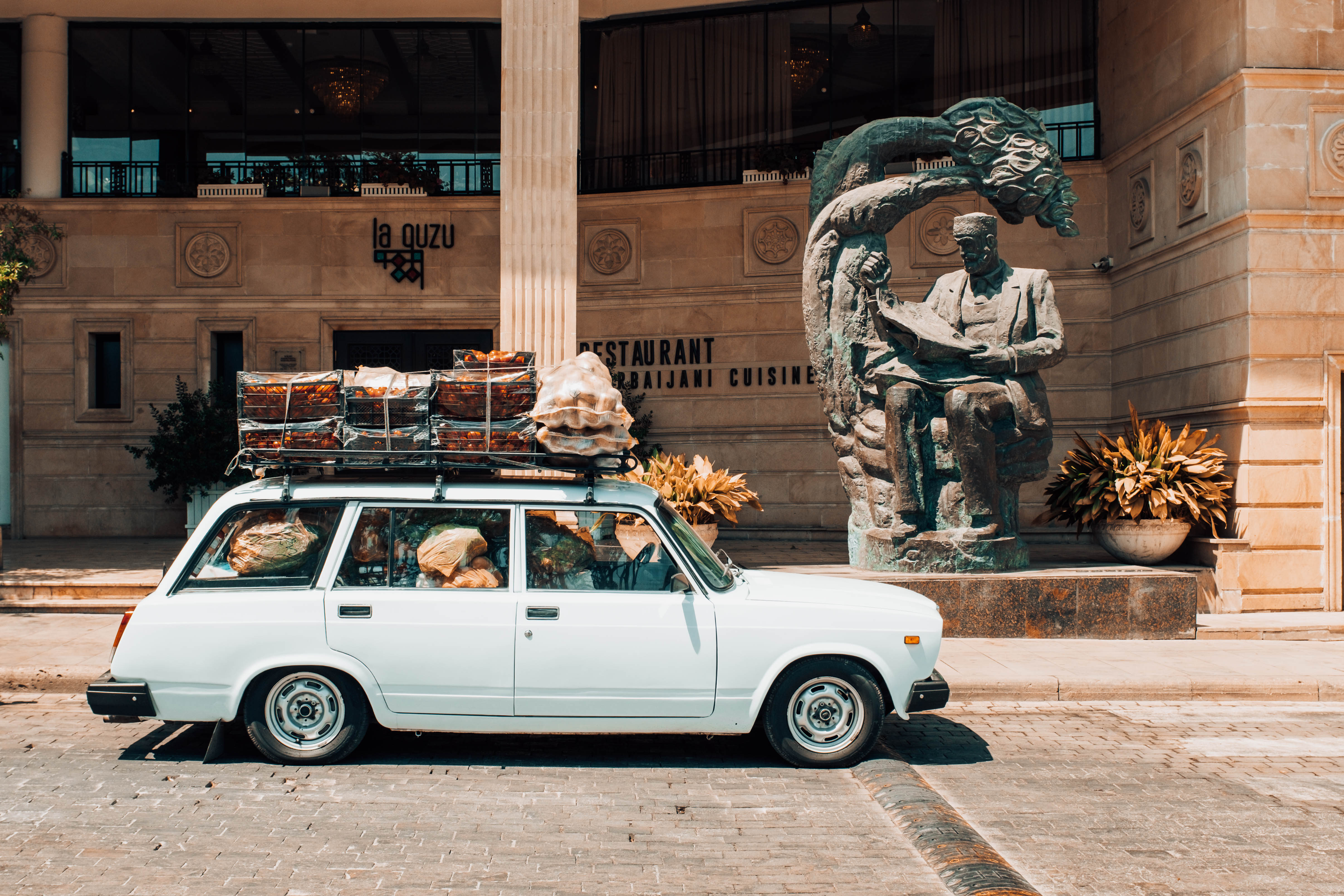
I asked my driver about the influence of the Soviet Union, and he told me that old people speak Azerbaijani and Russian, but young people speak Azerbaijani and English. More Russians vacationed in Azerbaijan before, but because of the conflict in Ukraine, this has impacted the average Russian’s ability to travel. Aside from the Soviet automobiles (Ladas) that I would frequently spot on the road, there was something Soviet-esque about the infrastructure of the city. The other notable feature of Azerbaijan is that most ethnic Azerbaijanis are Muslim, but the country is quite secular, so beer and wine are produced in the country. There are mosques throughout the city, but during my stay, I can’t remember ever hearing the call for prayer. Lastly, Azerbaijani, their language, is part of the Turkic language family, and Azerbaijan is also a member of the Organization of Turkic States which includes Kazakhstan, Kyrgyzstan, Turkey and Uzbekistan.
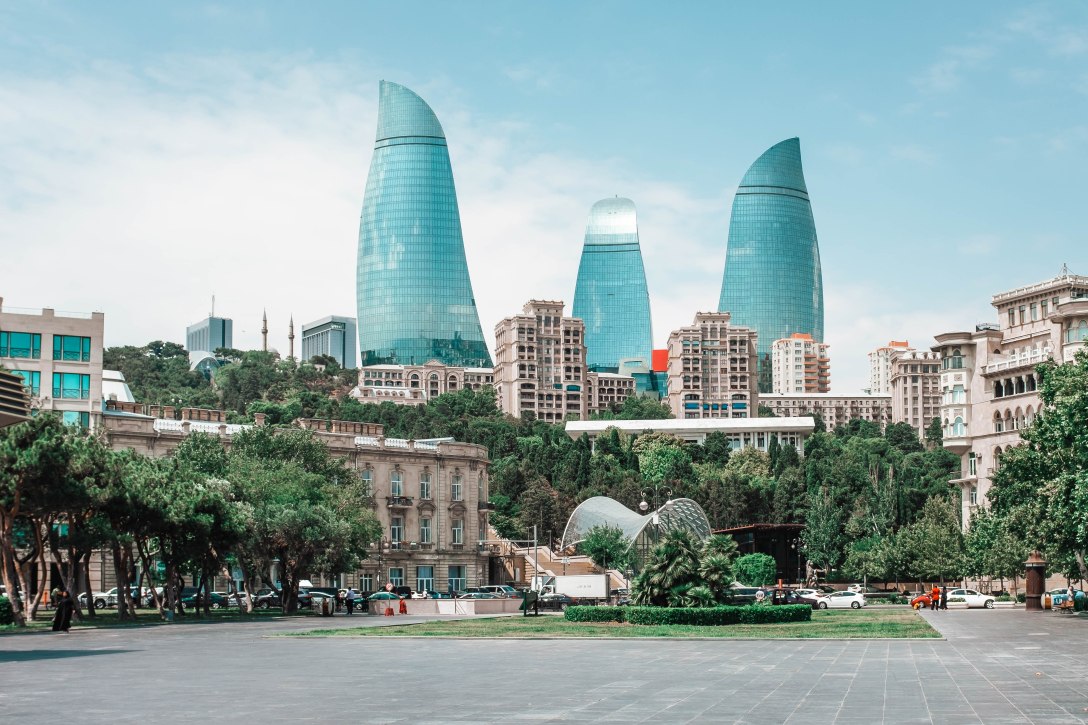
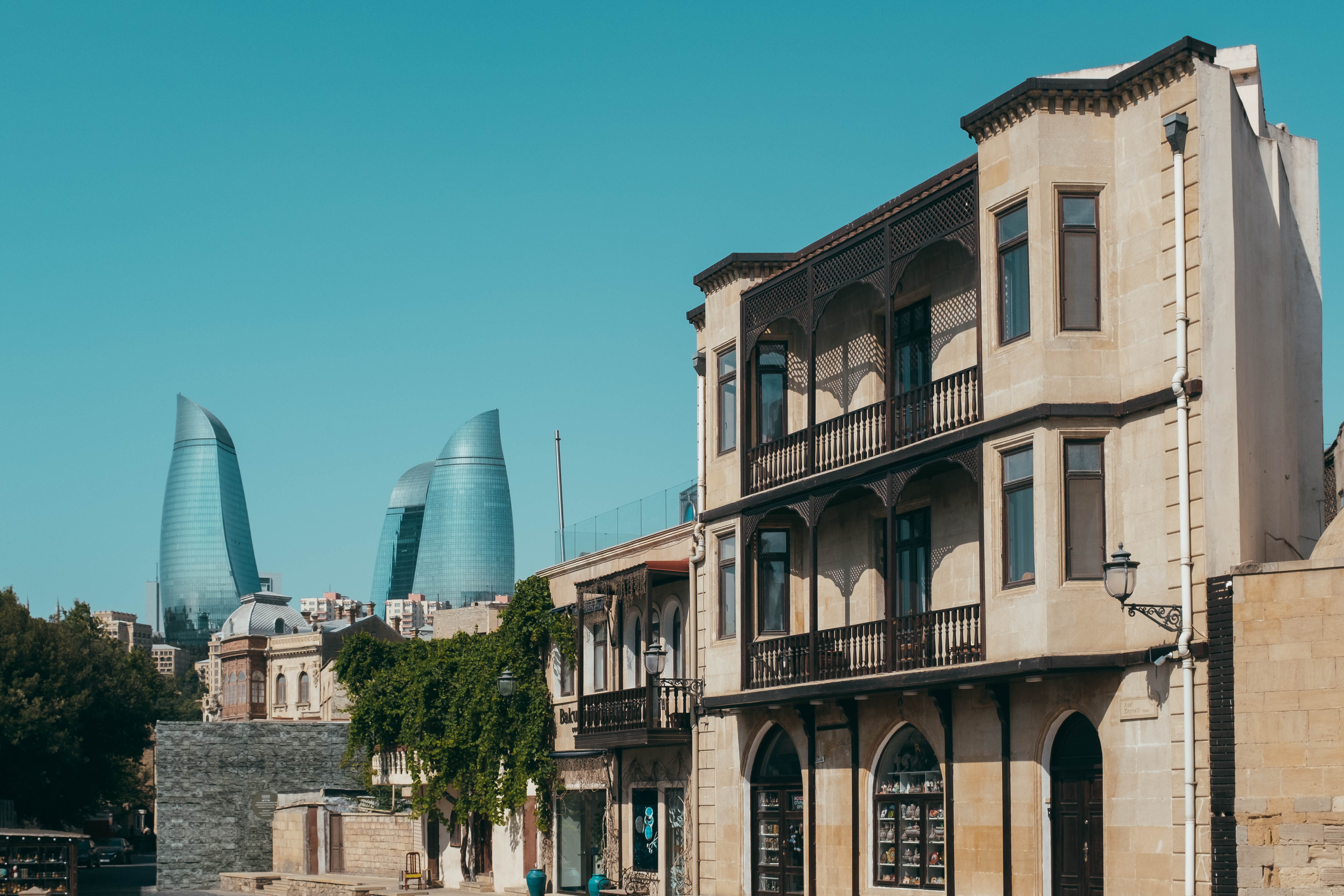
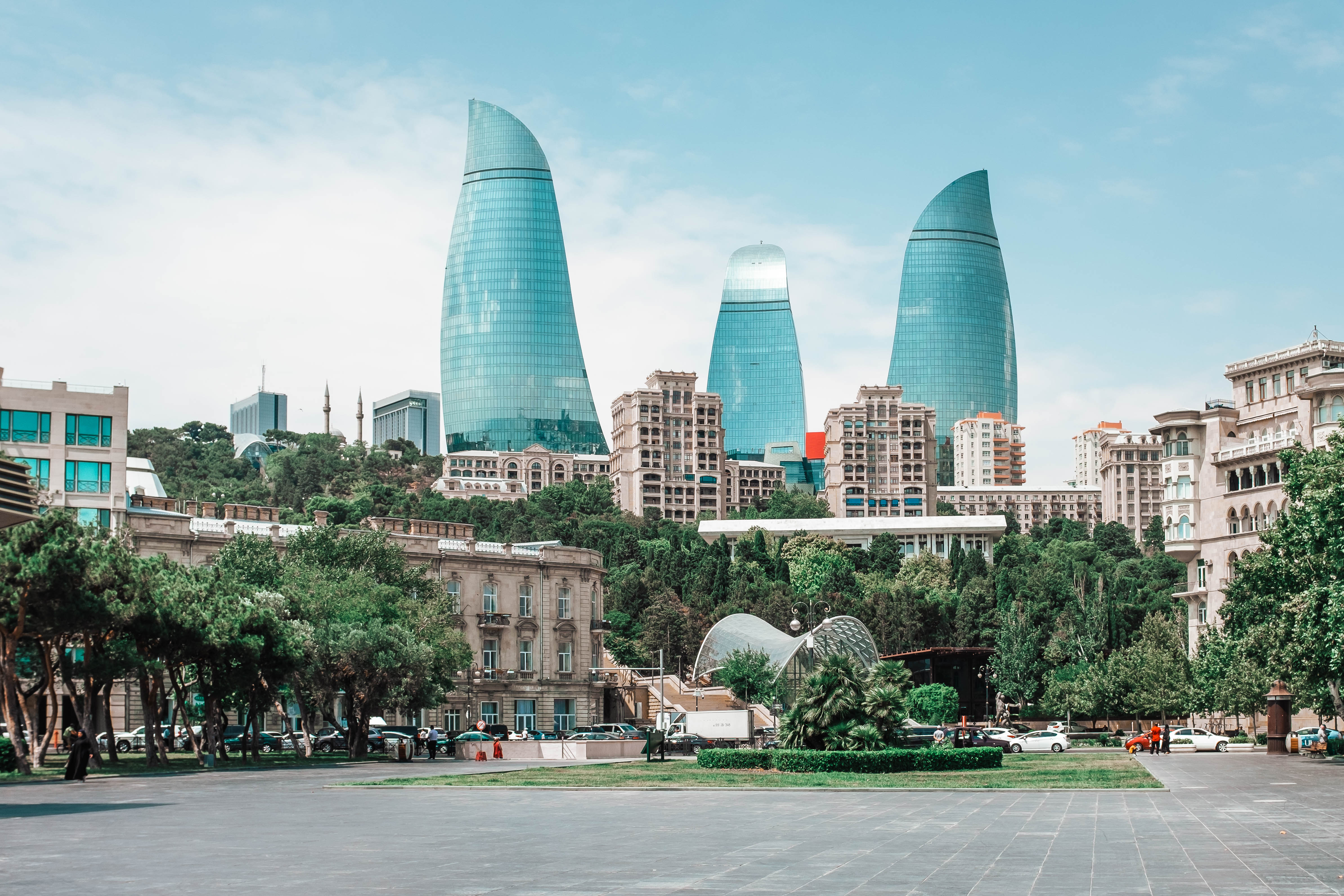
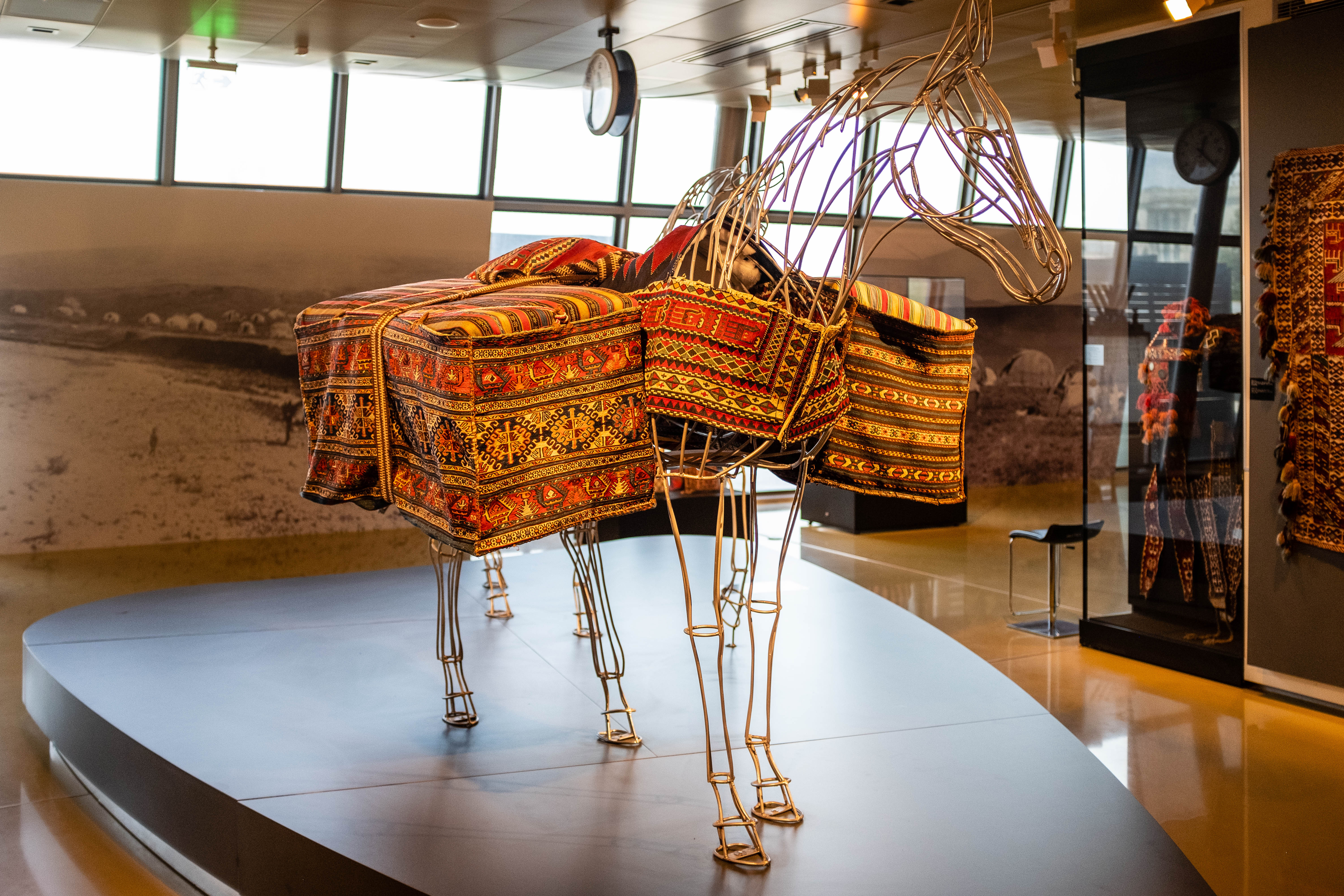
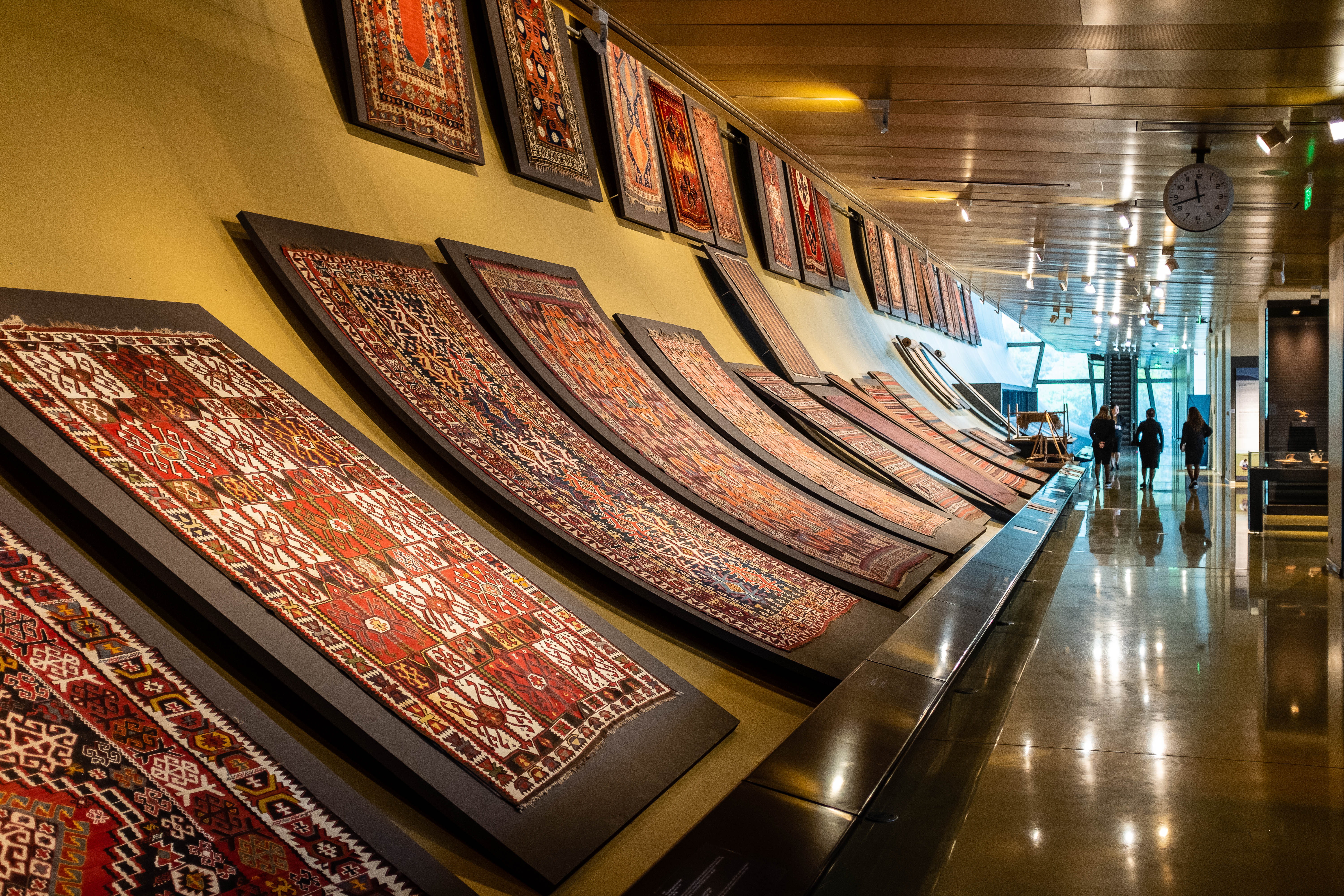
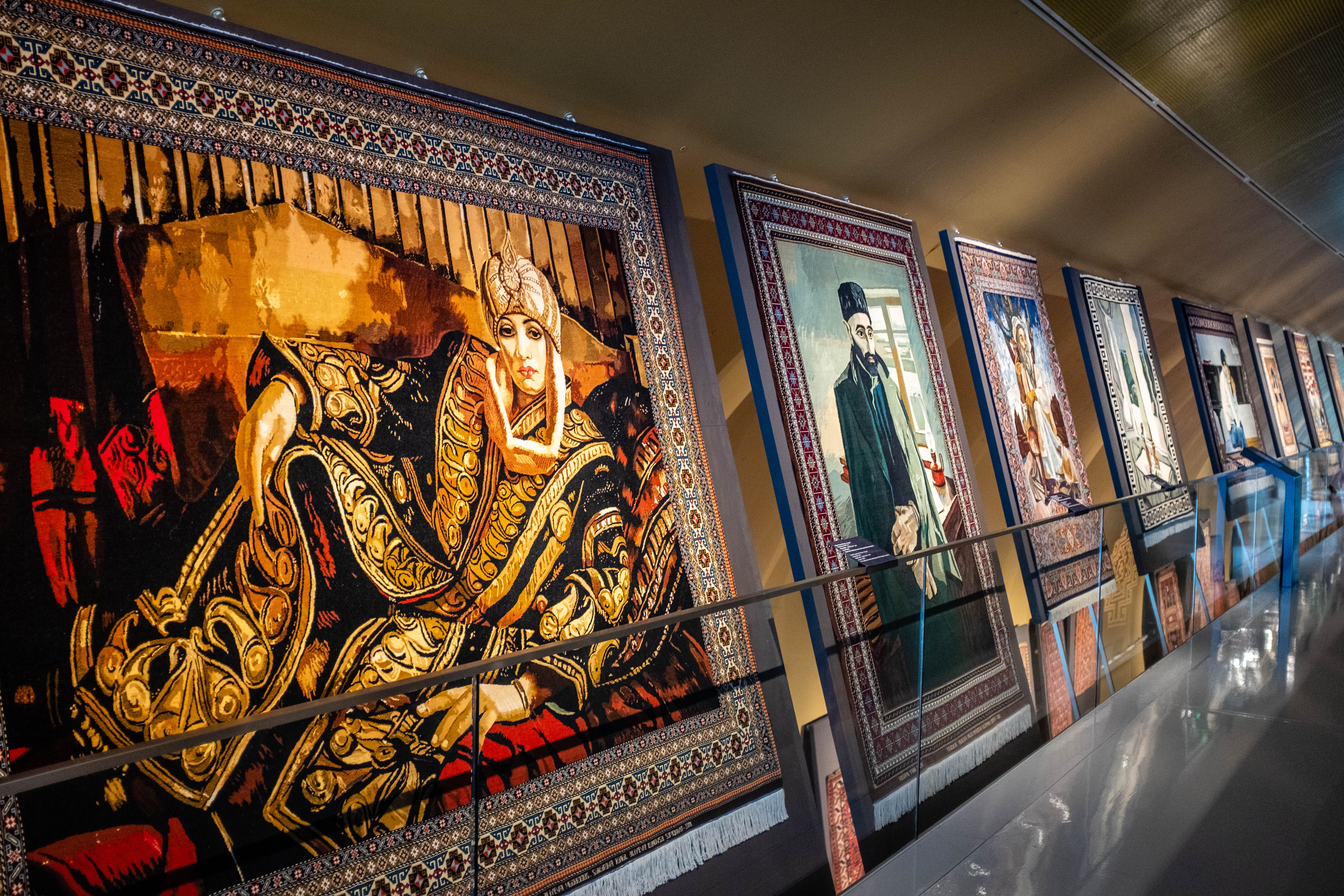
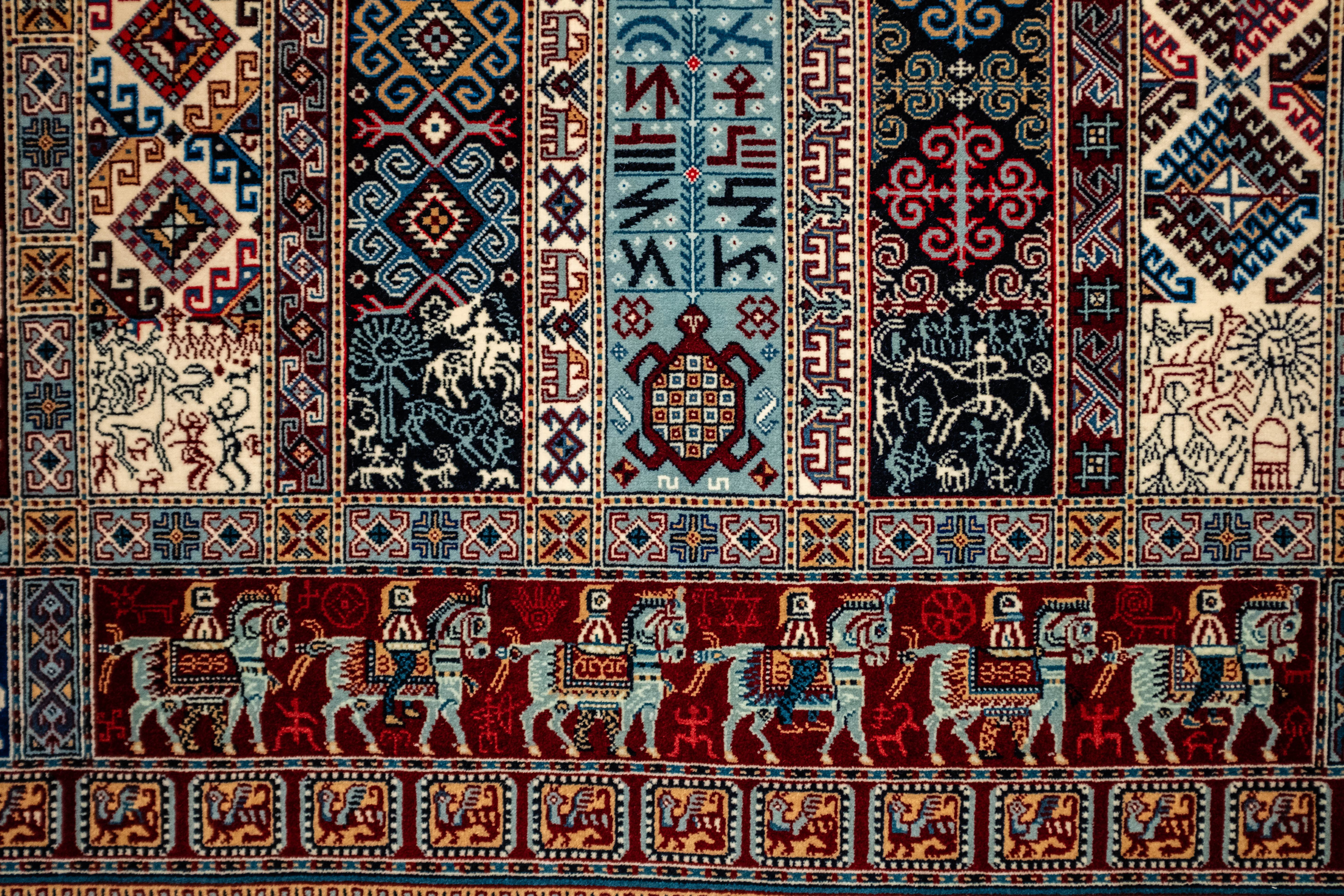
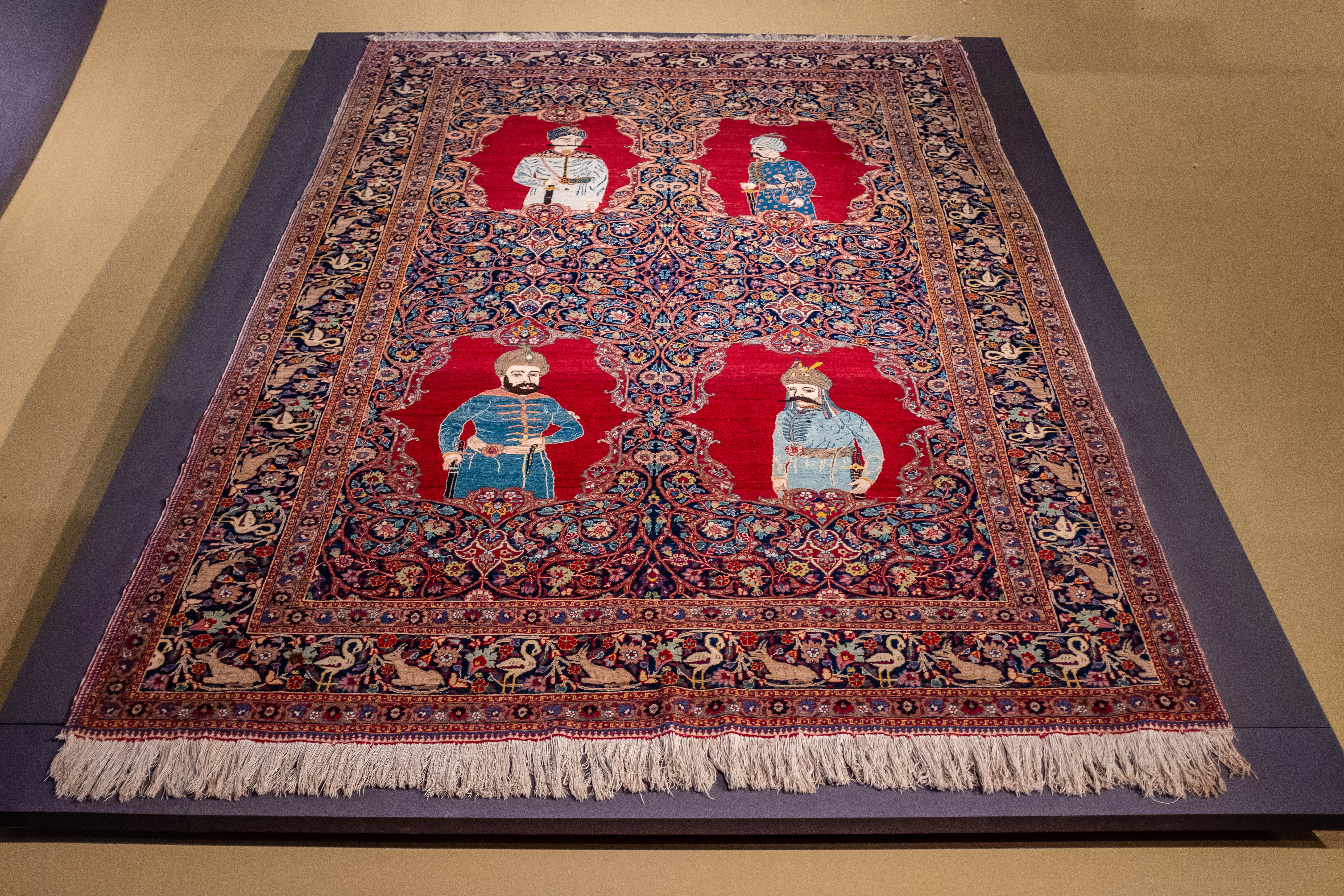
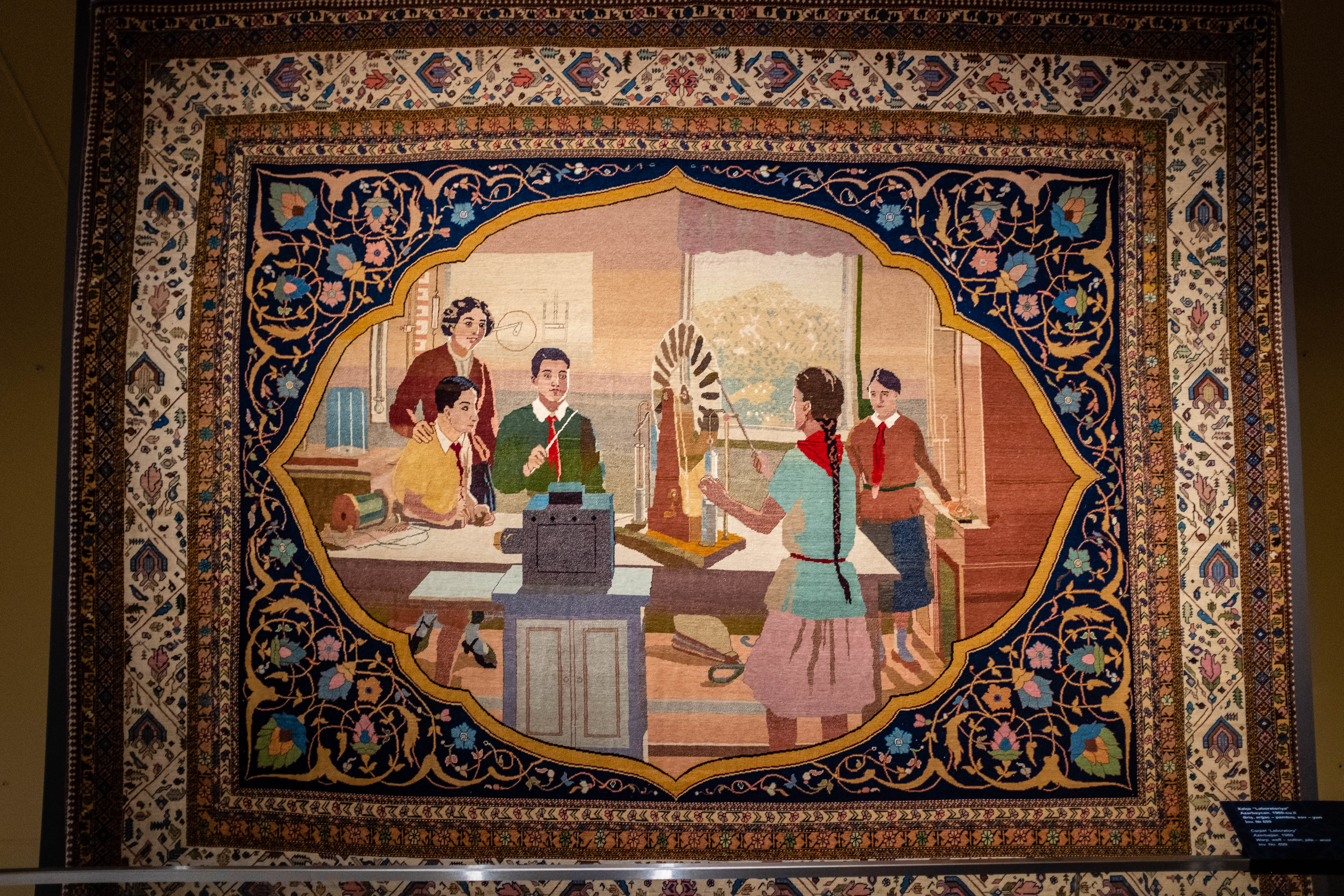
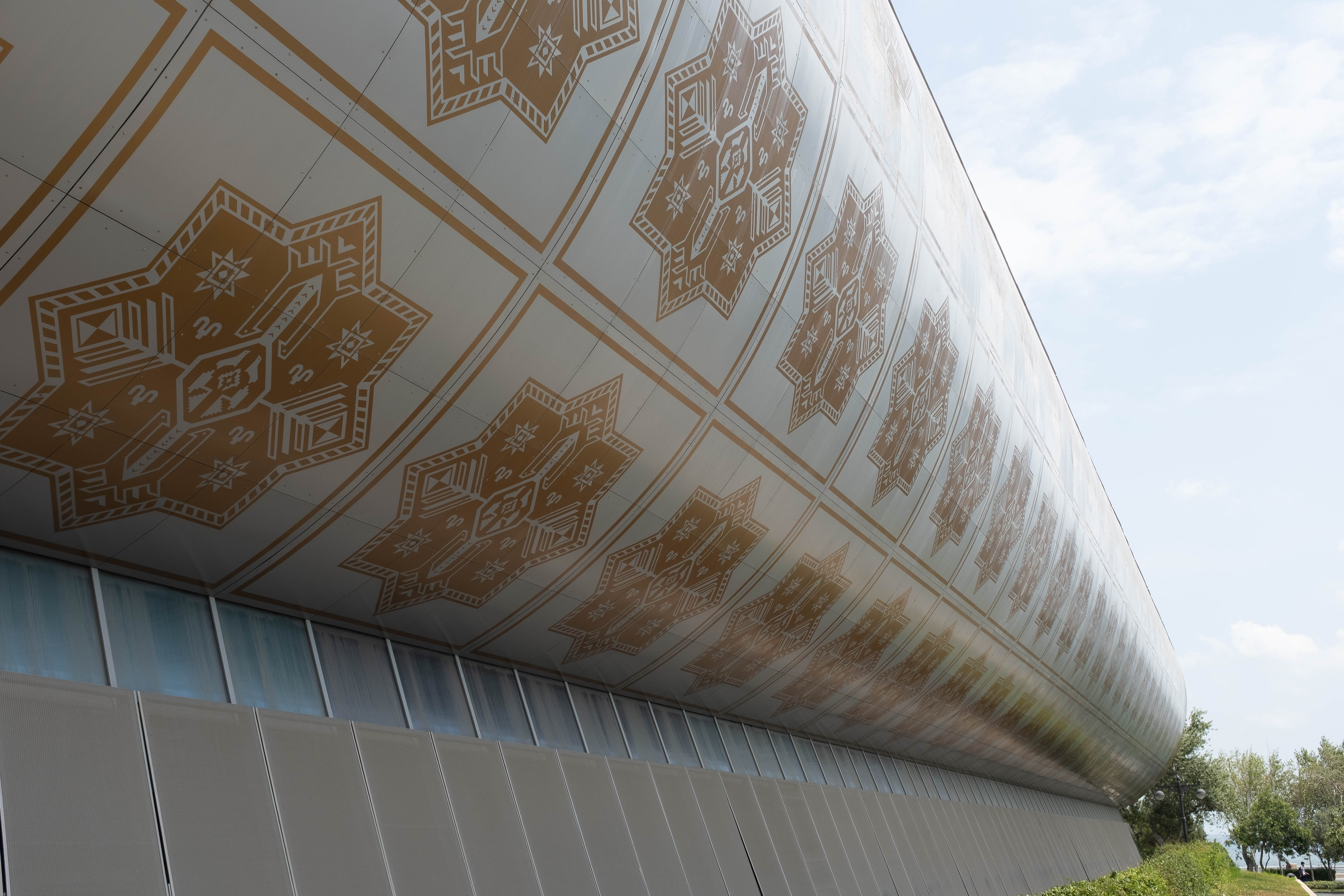
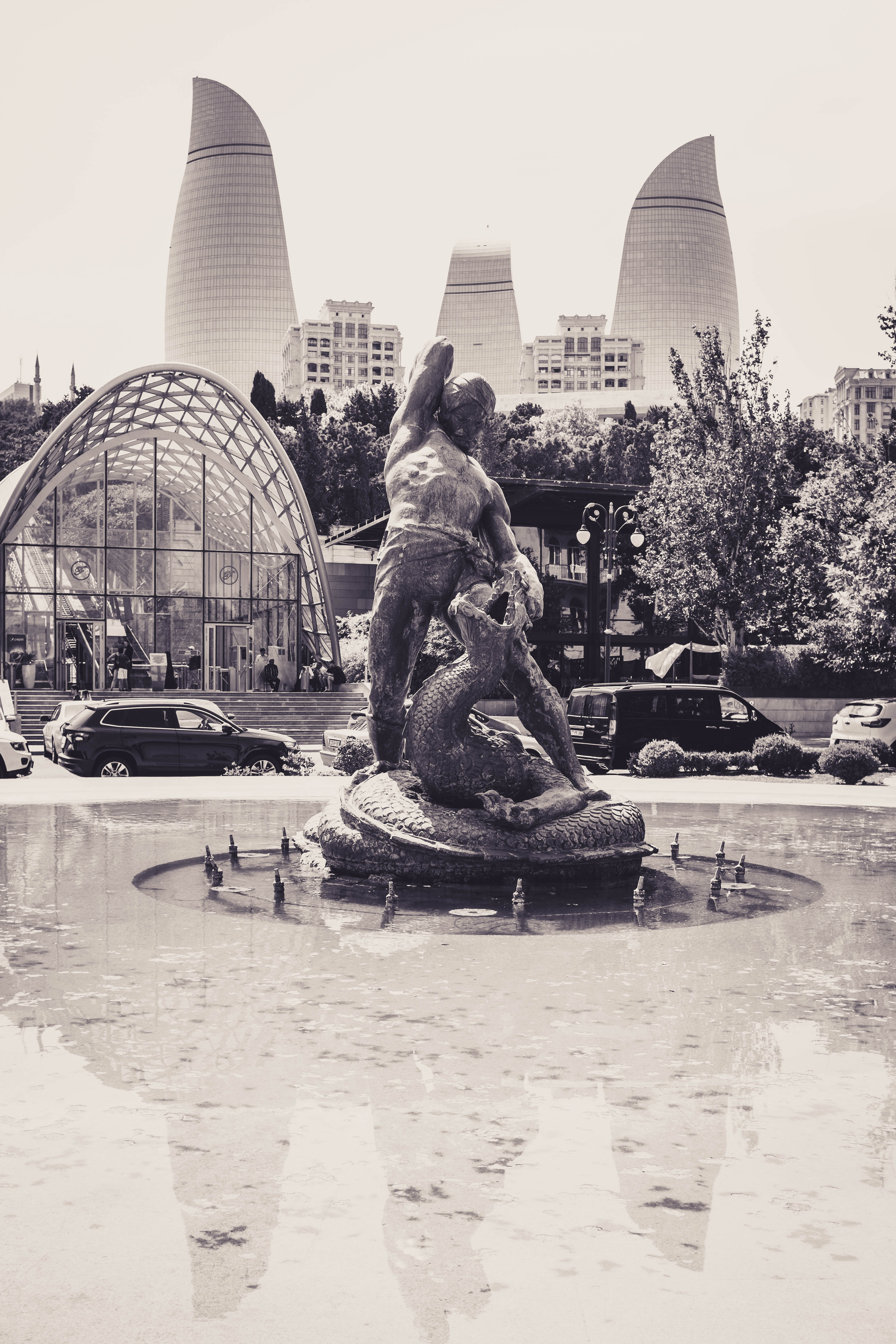
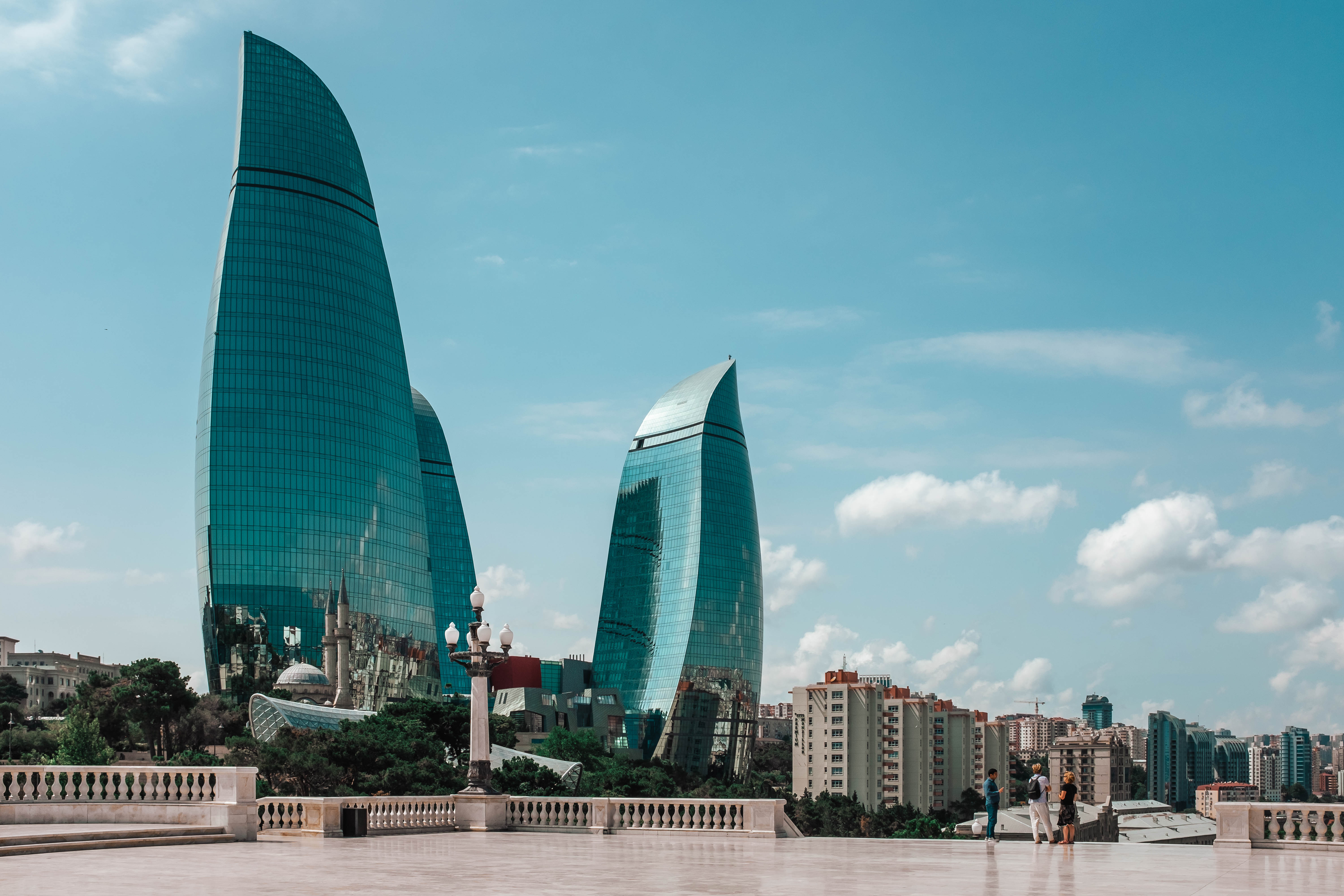
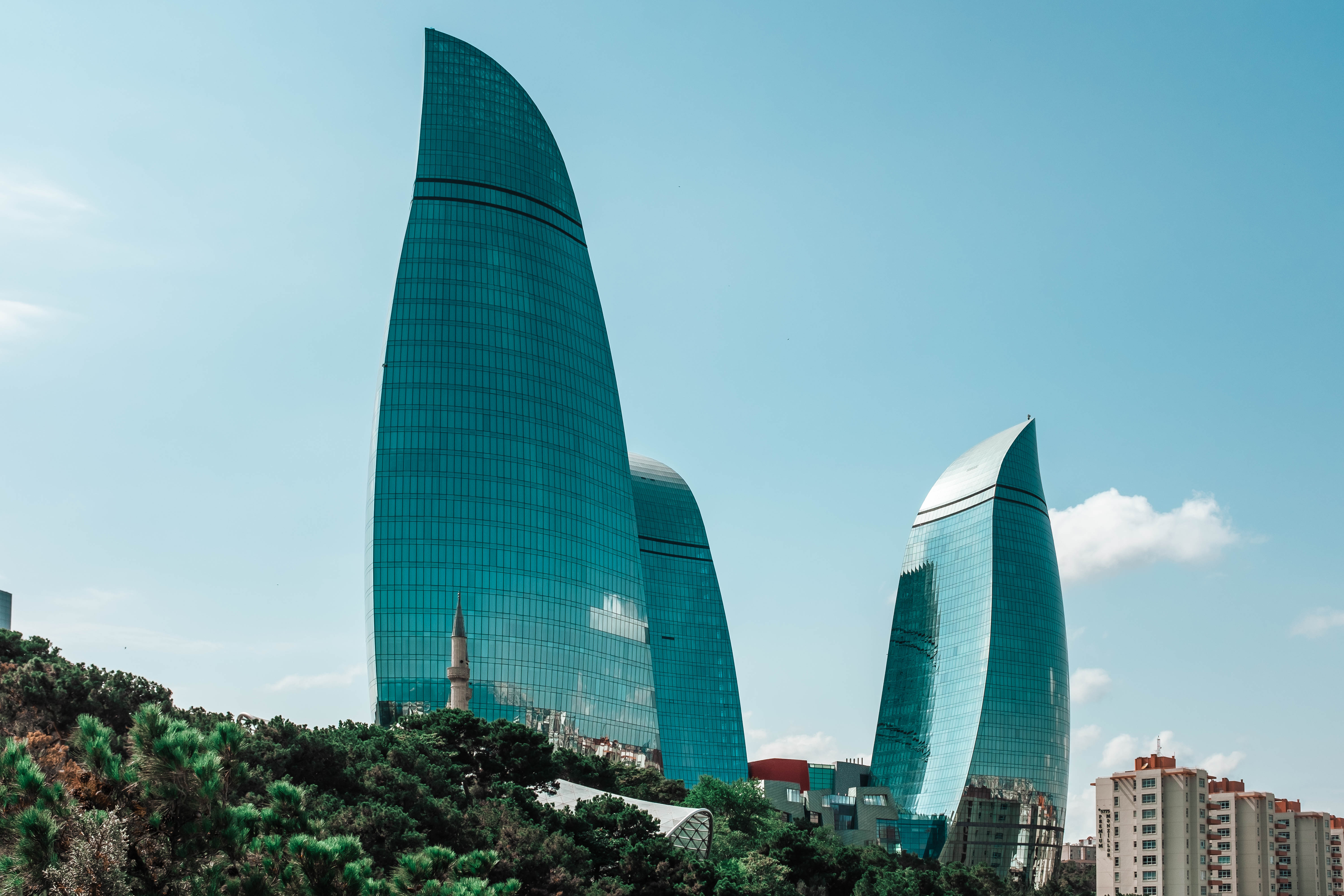
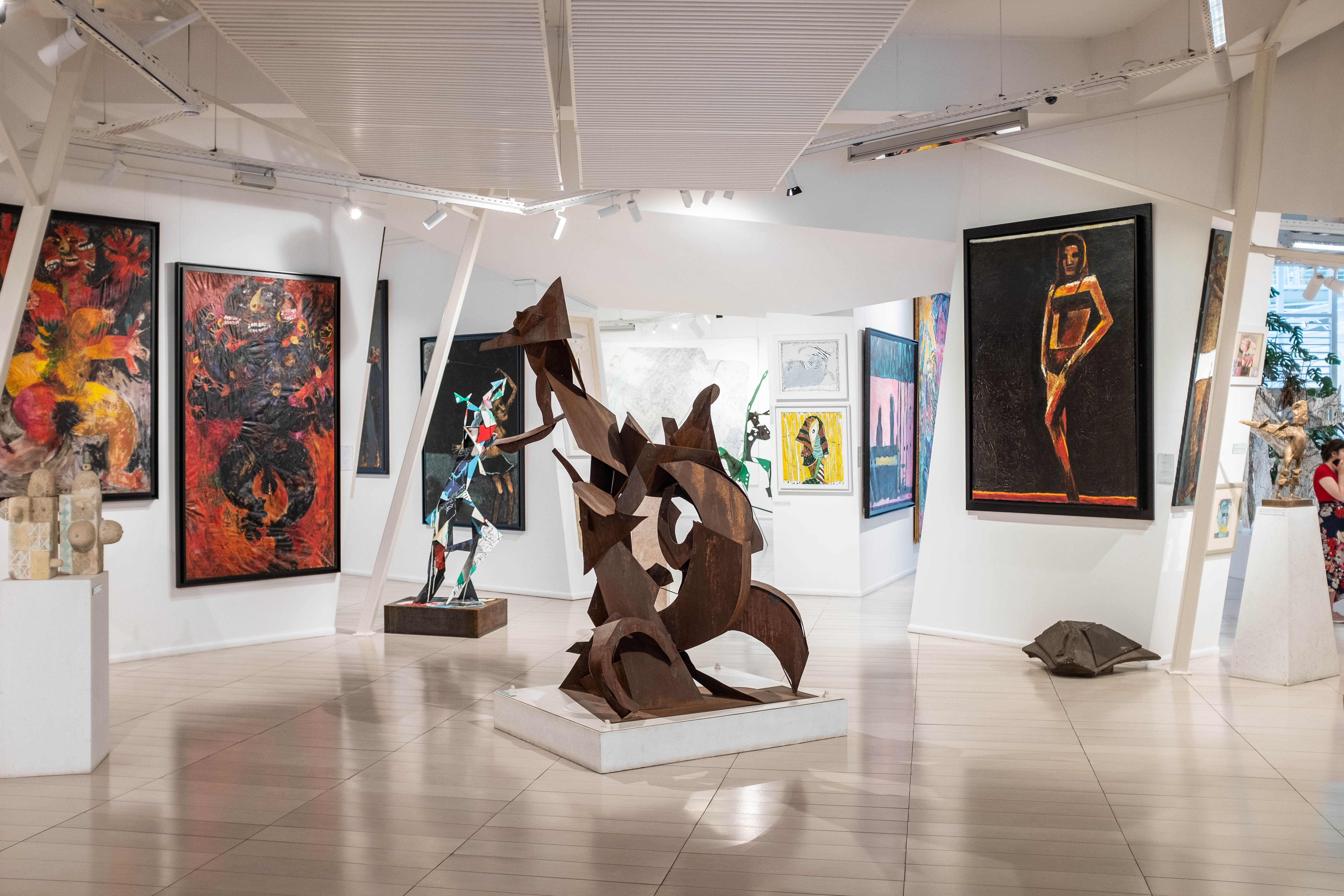
After checking into my Airbnb, I fell asleep, and spent the next couple days exploring the vicinity near the Old Town. It was quite sunny and warm while I was in Baku; however, because the city borders the Caspian Sea (which is not a true sea but instead a salty lake), there was always a breeze or gusts of wind throughout the city making the summer weather temperate. For breakfast, I would eat sojouk and eggs with the tandir bread. For lunch and dinner, I would eat gurza, or lamb dumplings, and pilaf rice with dried fruit and chicken. I visited the Azerbaijan Carpet Museum; walked up the hill to see the Flame Towers, the most distinctive set of buildings in Baku; and perused the contemporary art museum. Though there was more to see, I held back because I would be returning to Azerbaijan with Laika after we visited Armenia, so I didn’t want to explore the city and country too much without her. Thus, after three nights in the city, I bid adieu to Baku and boarded a plane for a short flight to Tbilisi, Georgia.
Little did I know at the time, I wouldn’t be visiting Azerbaijan again during my South Caucasus trip.
To be continued.
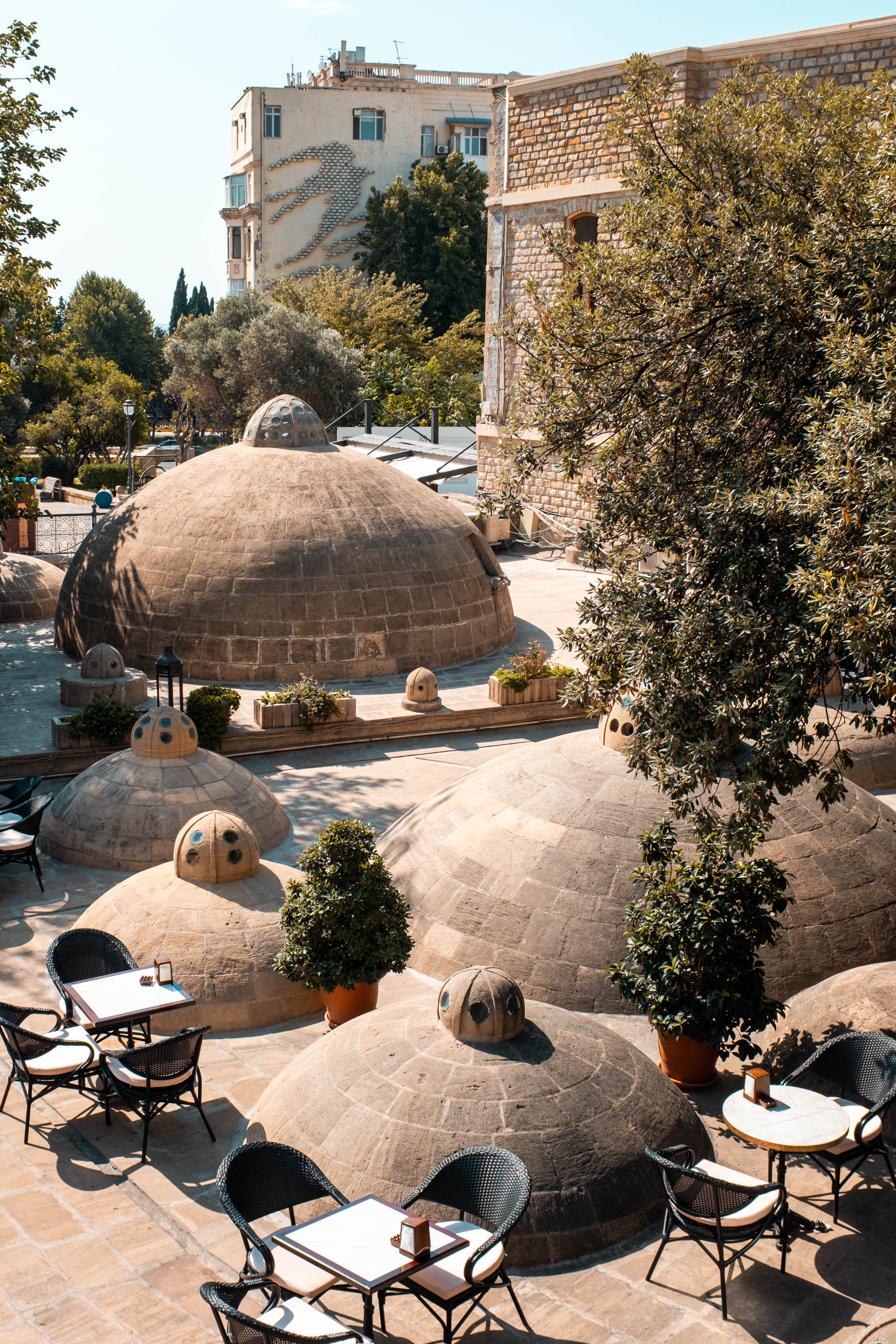
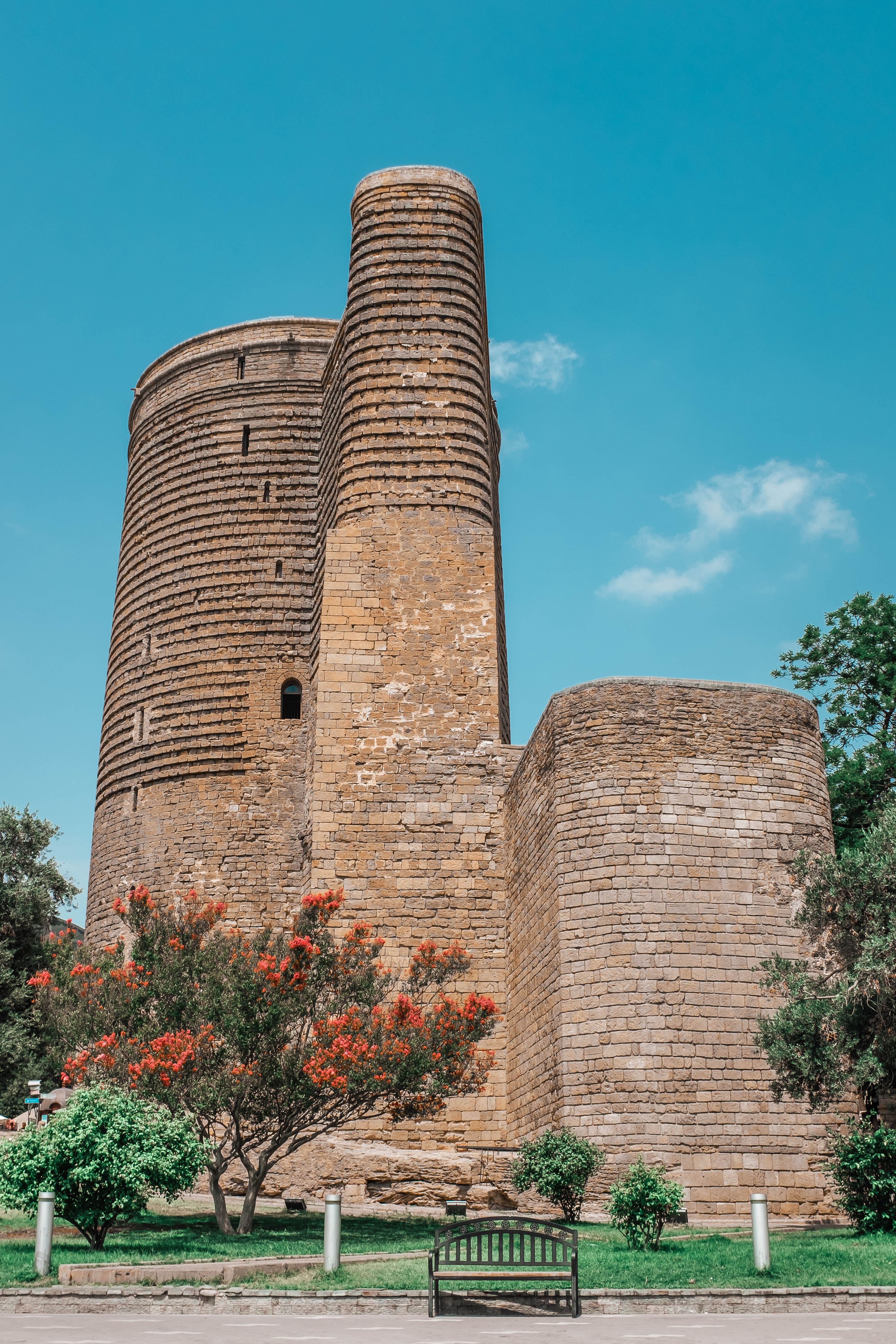
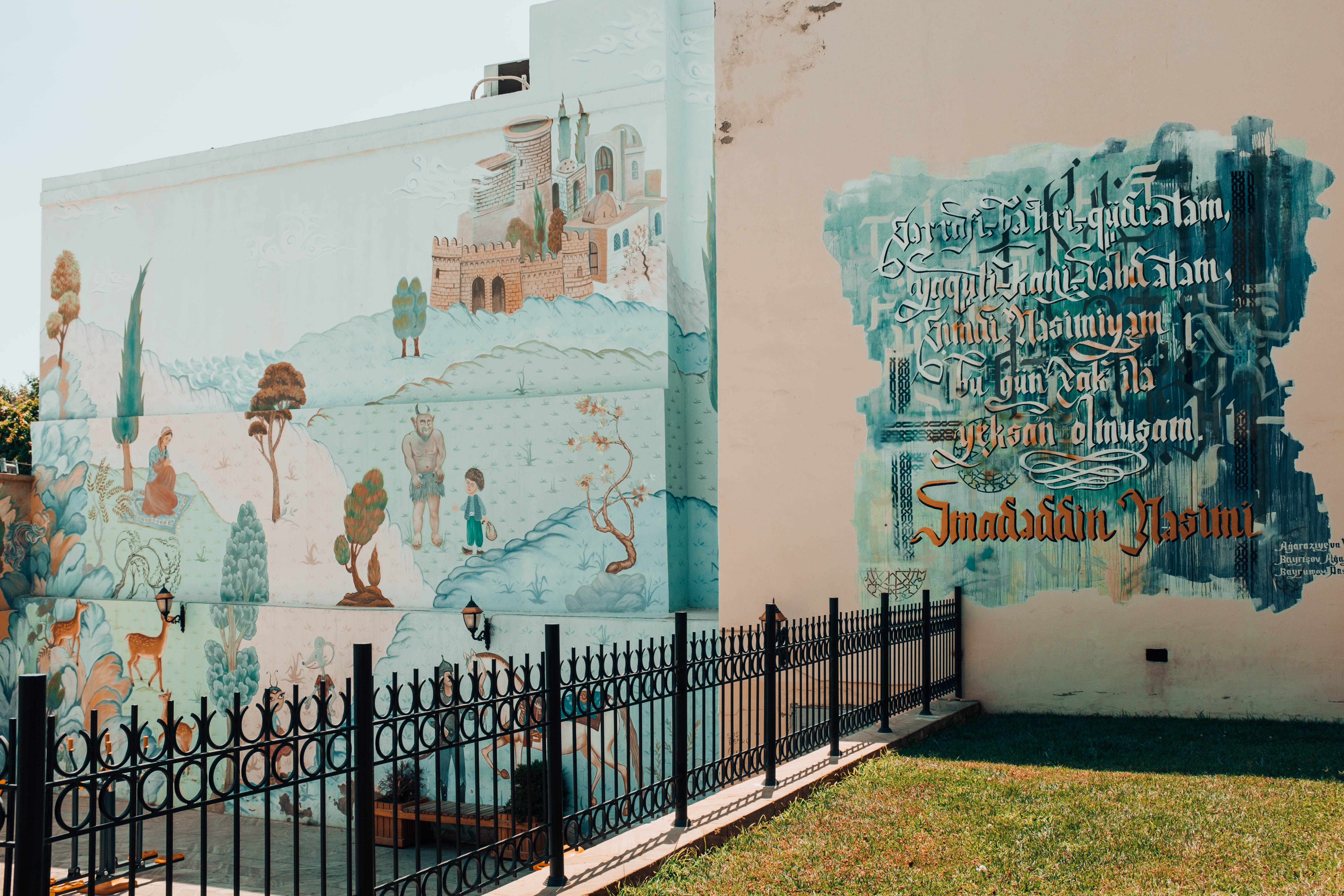
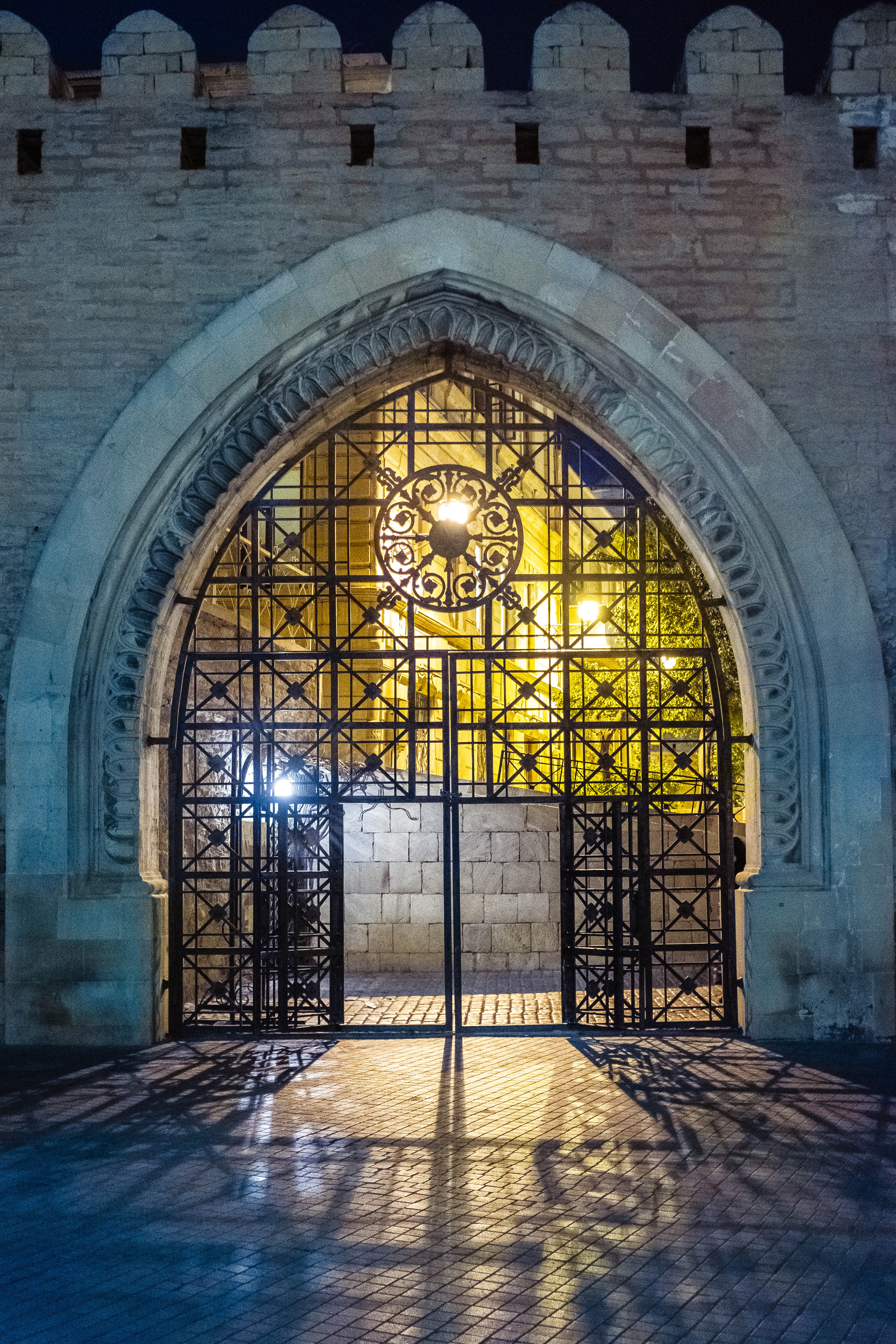
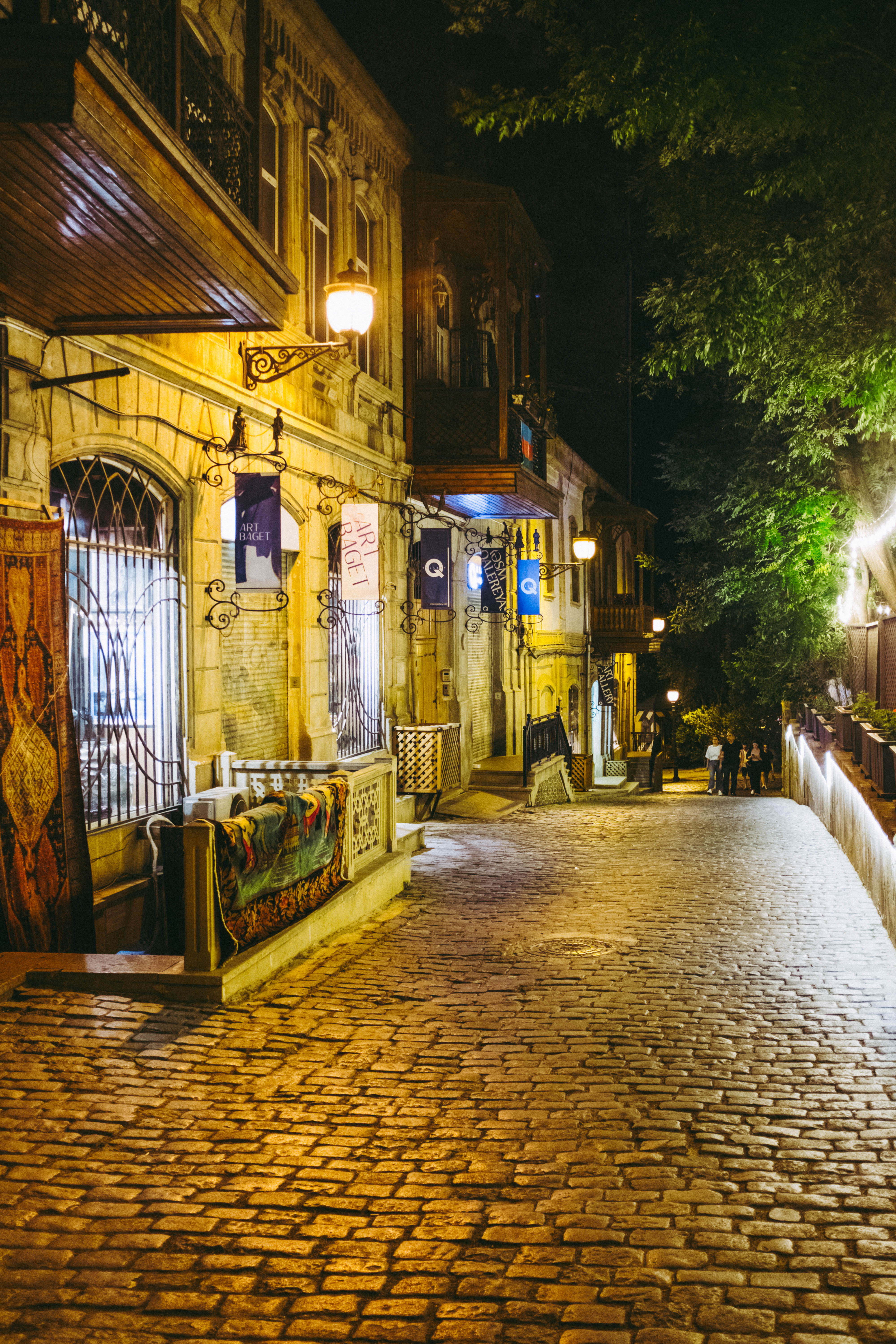
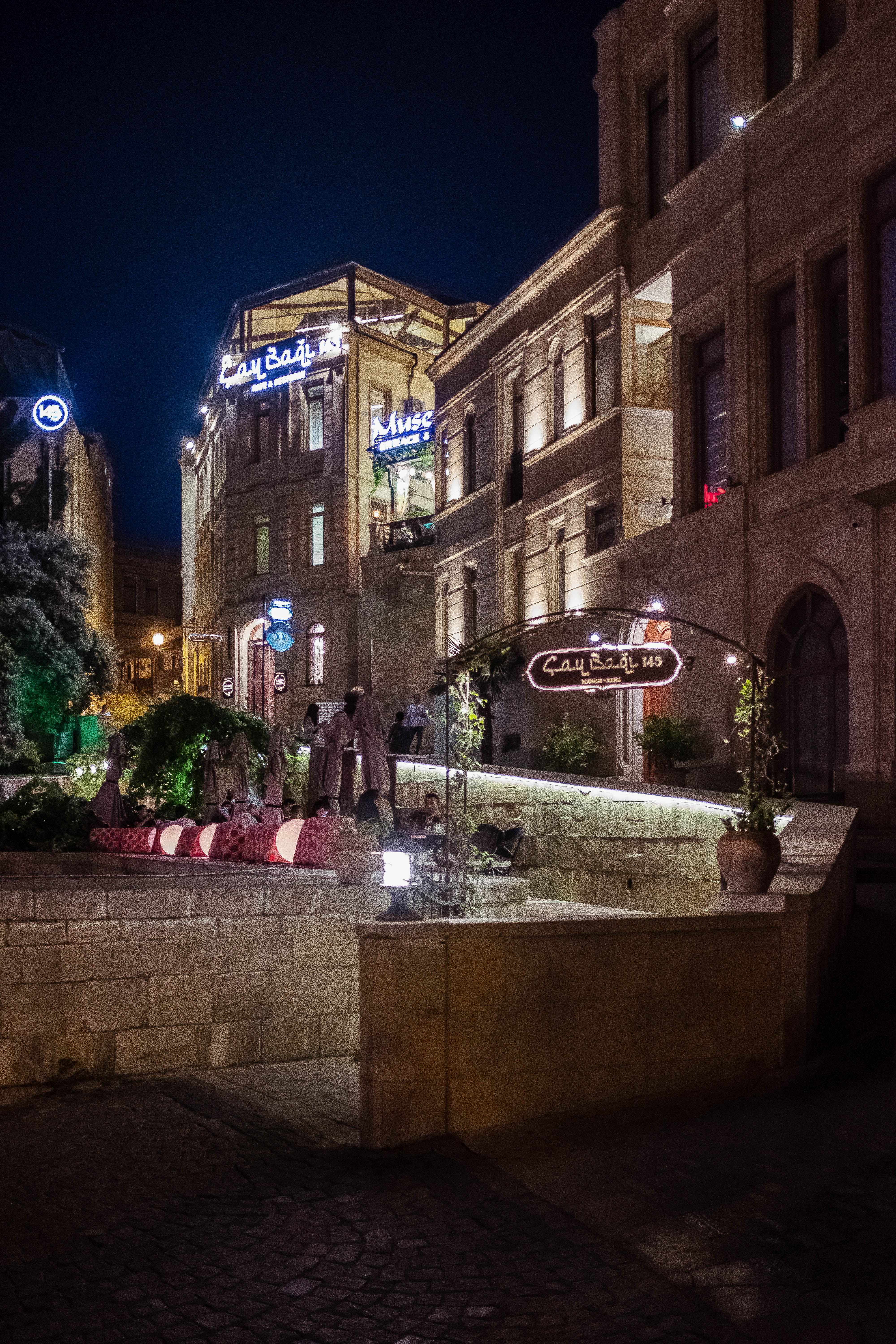
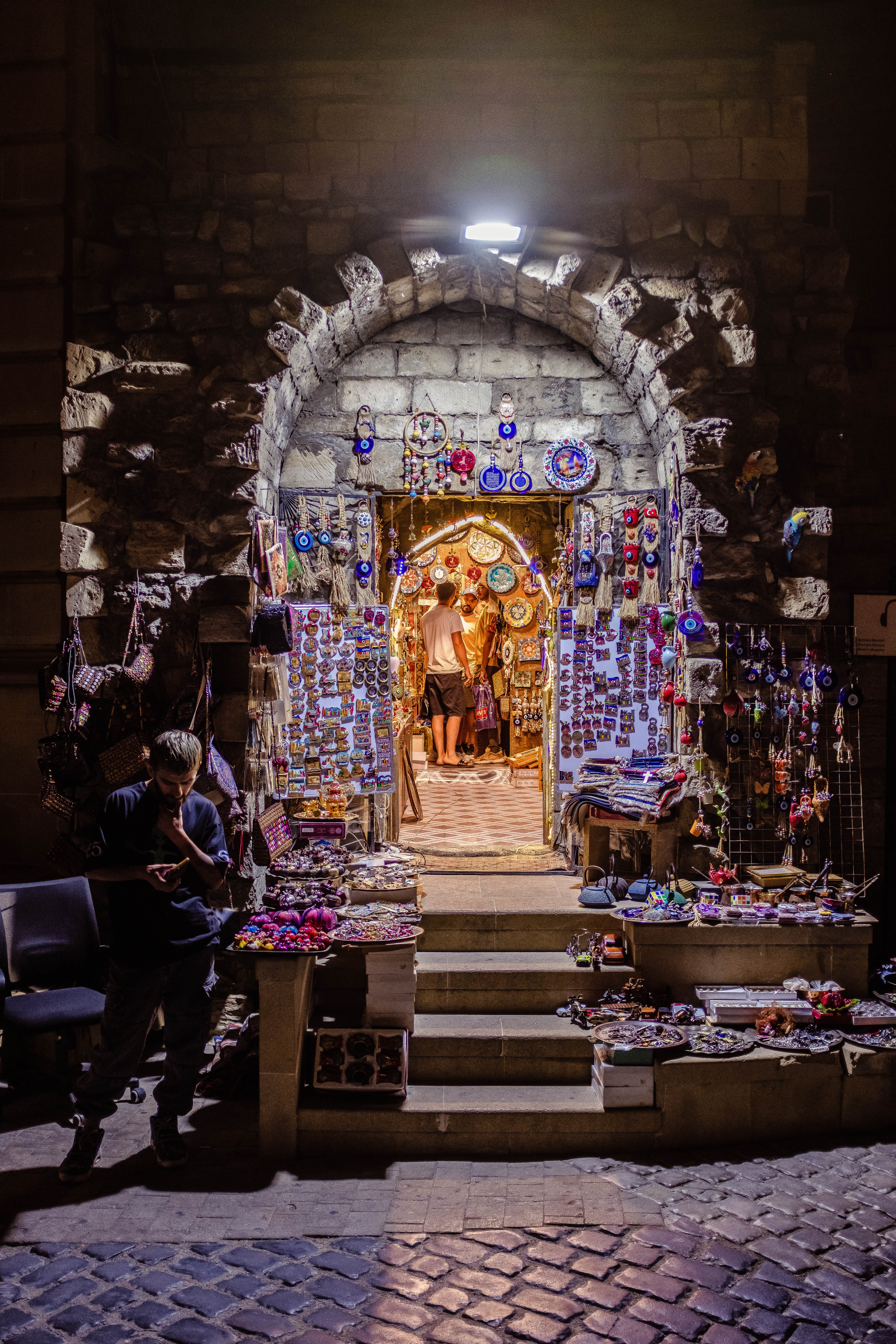
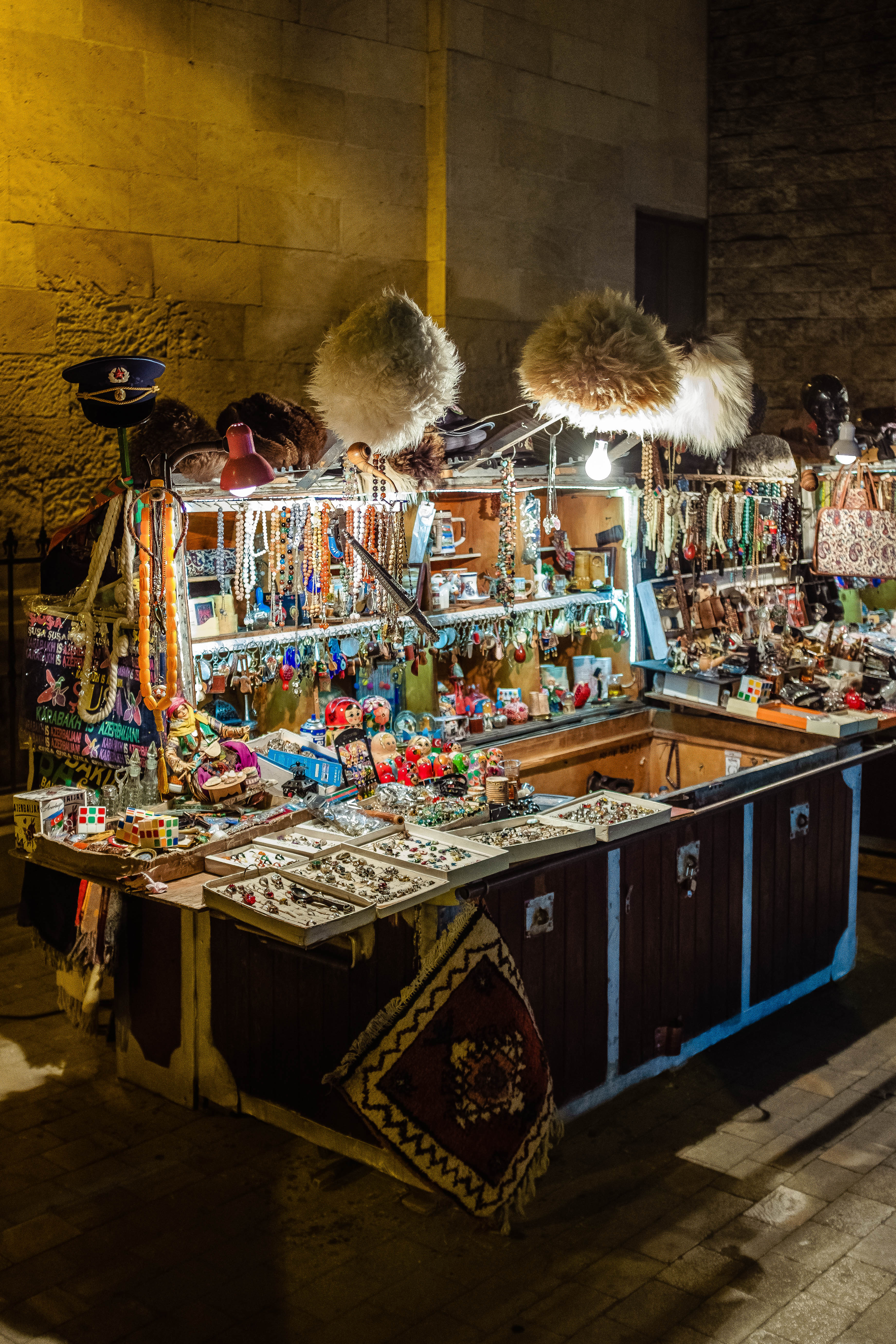
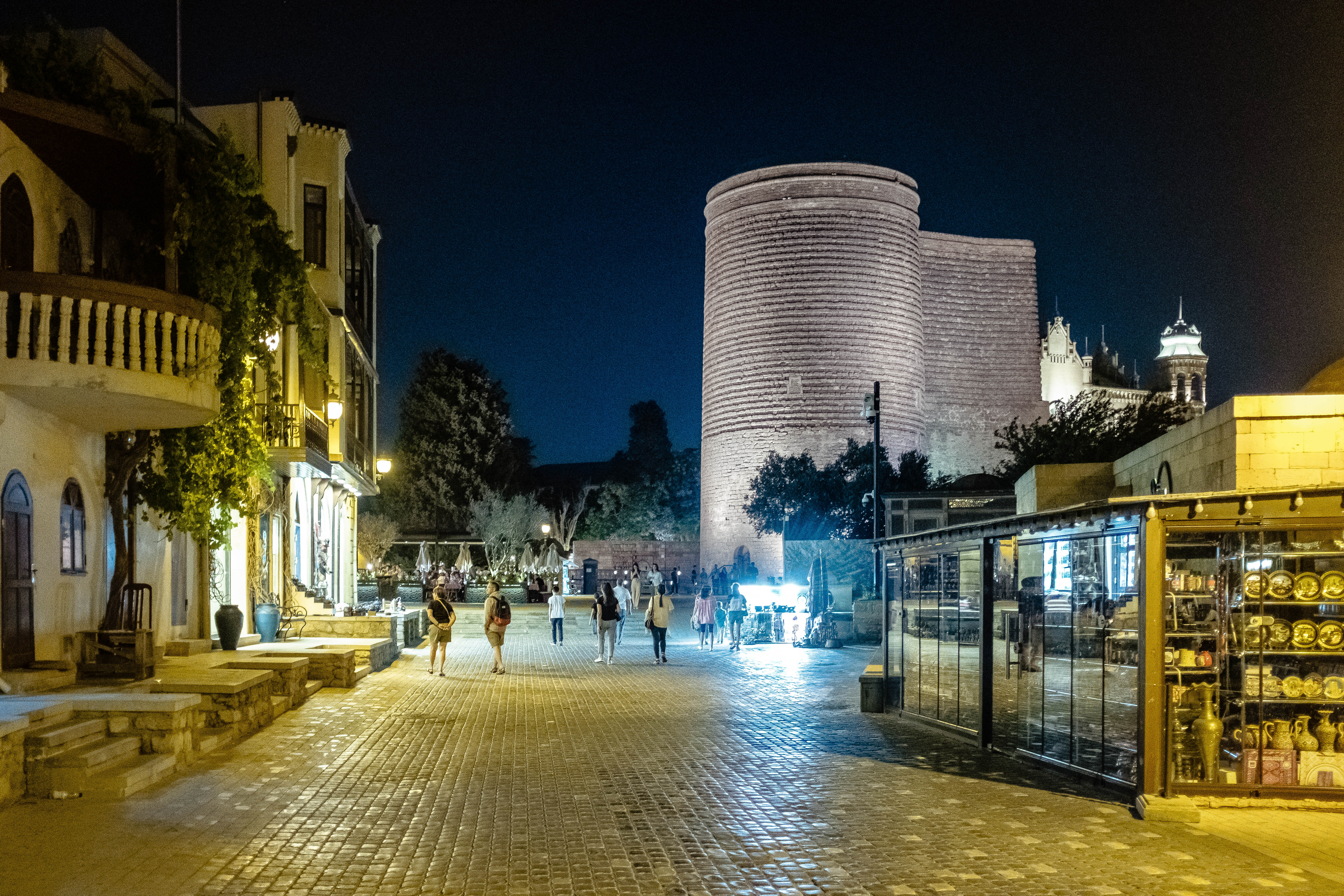
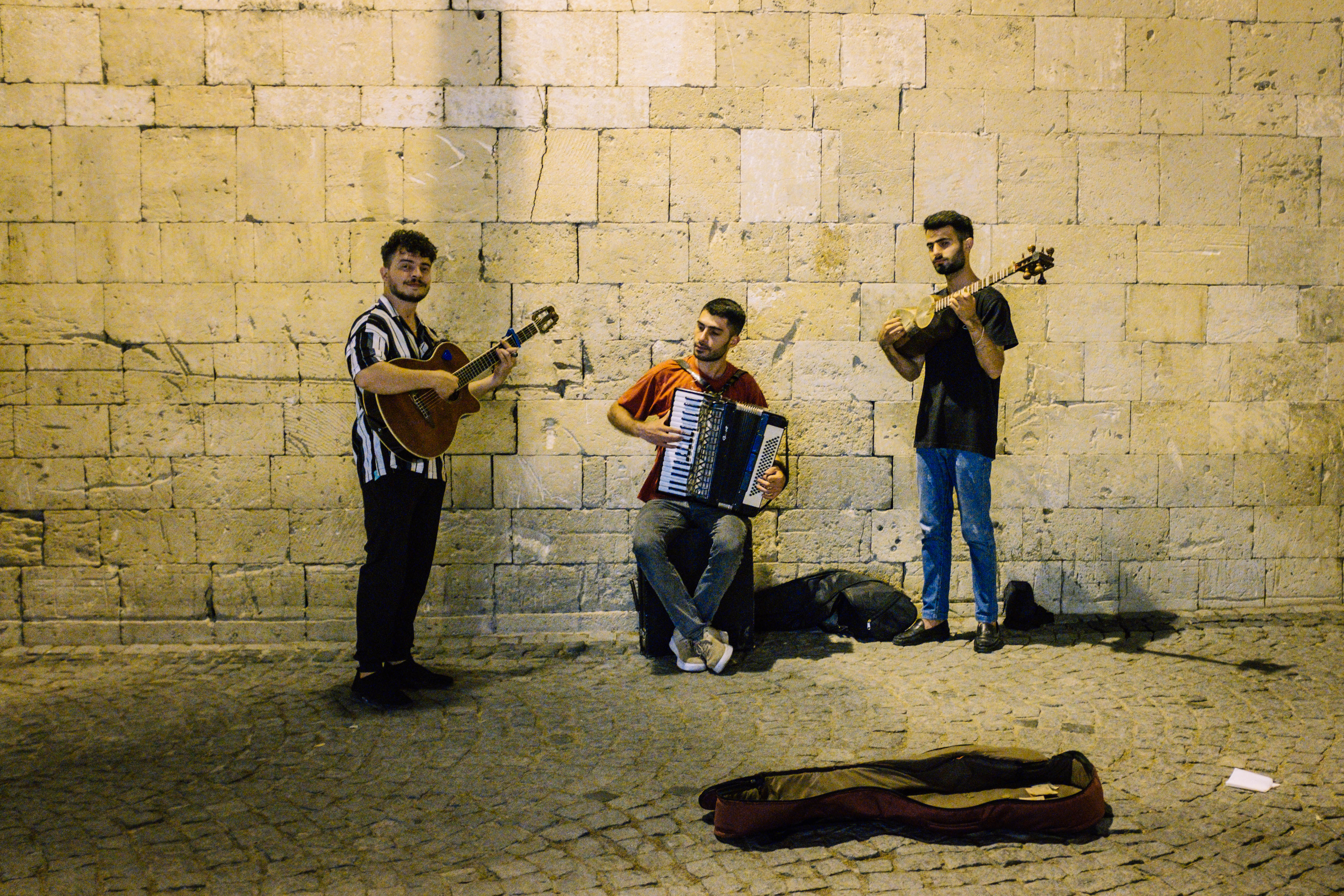
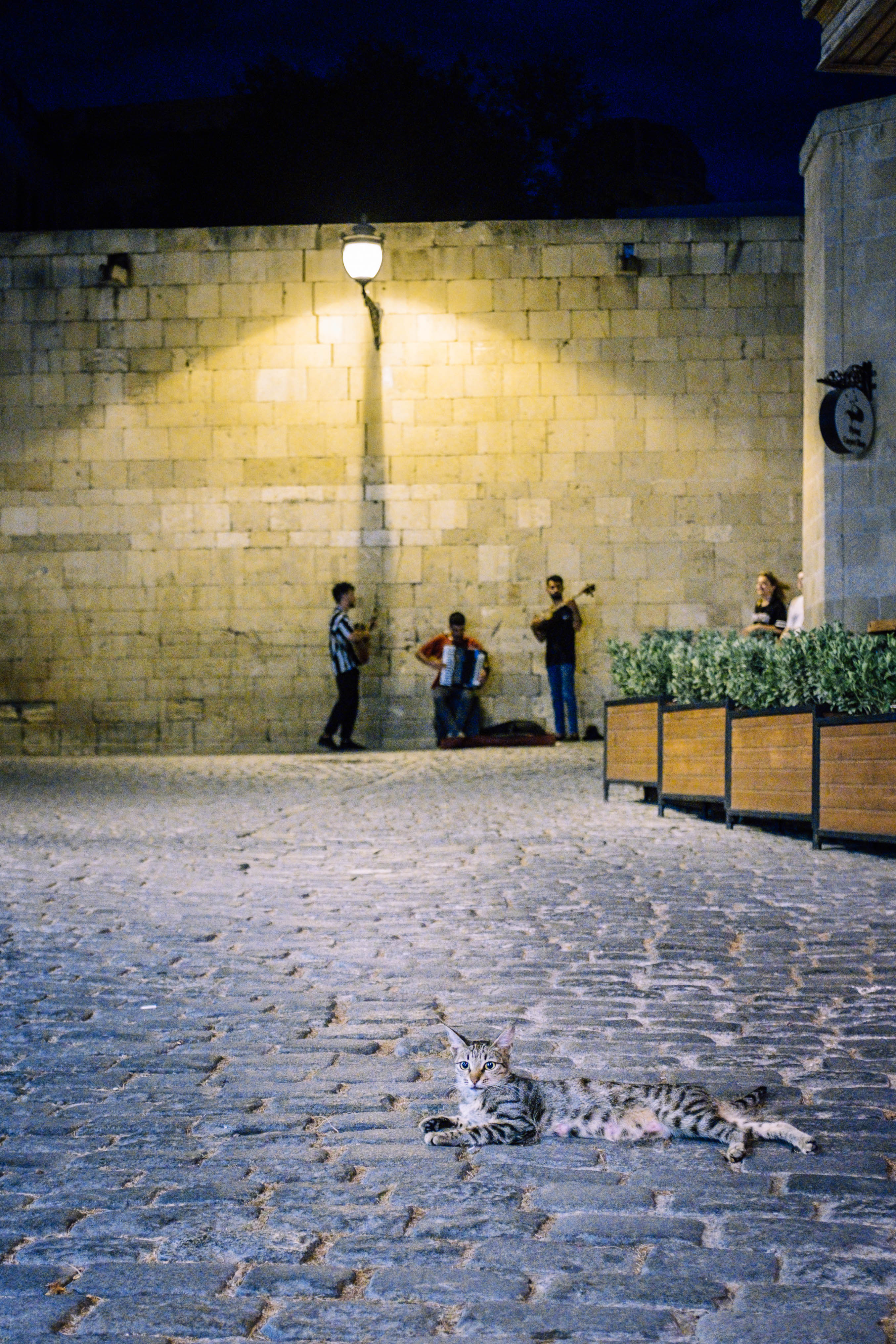
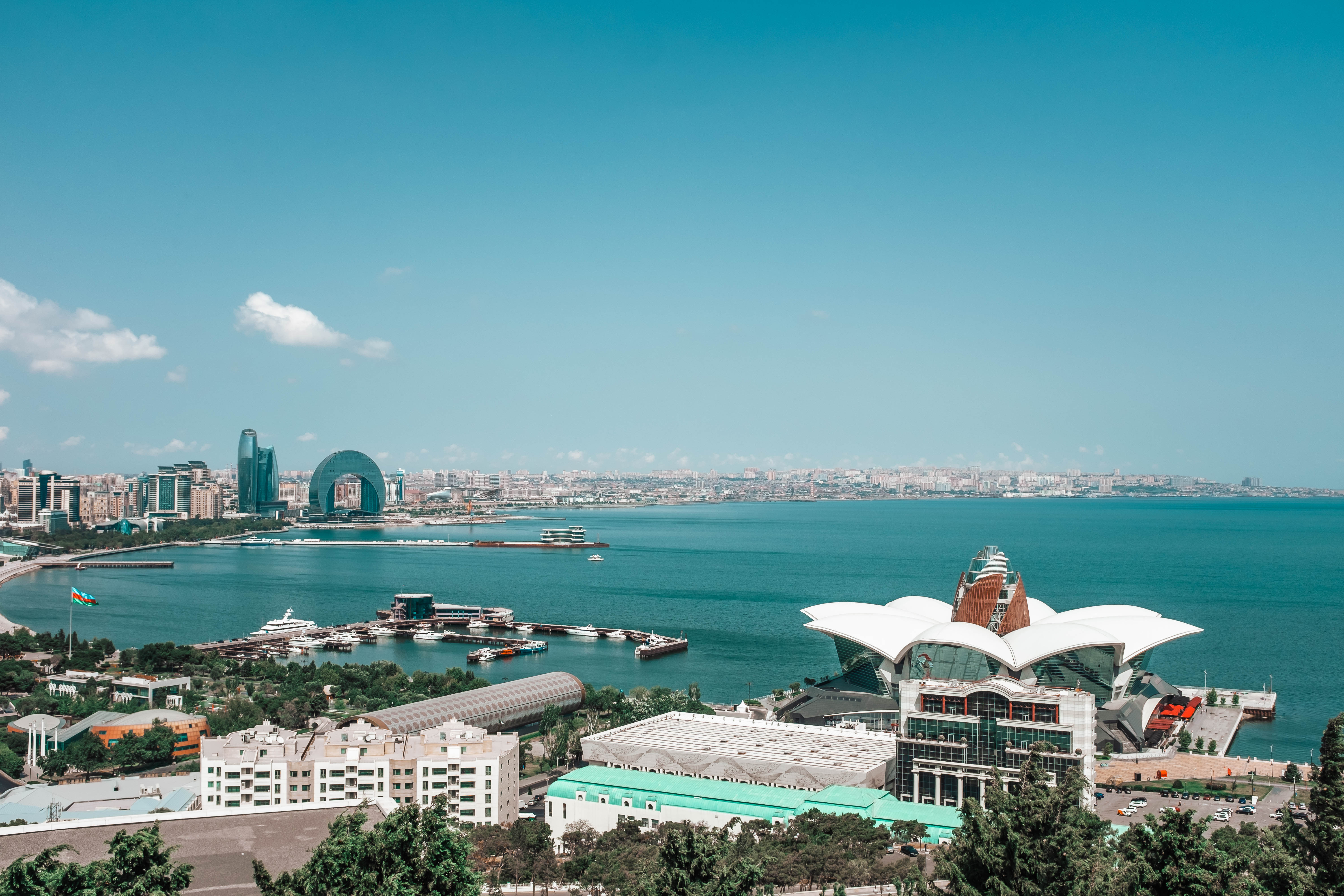
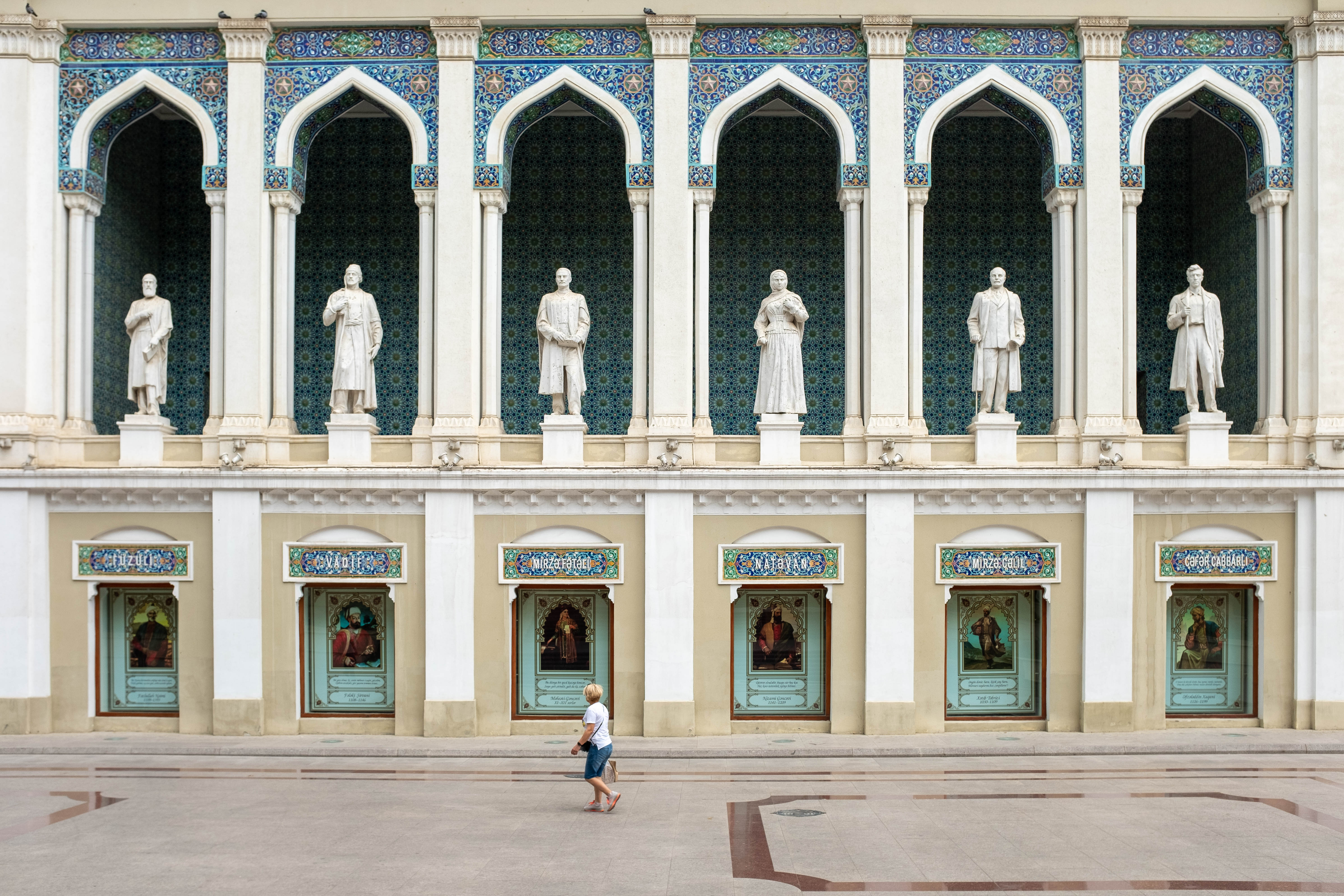
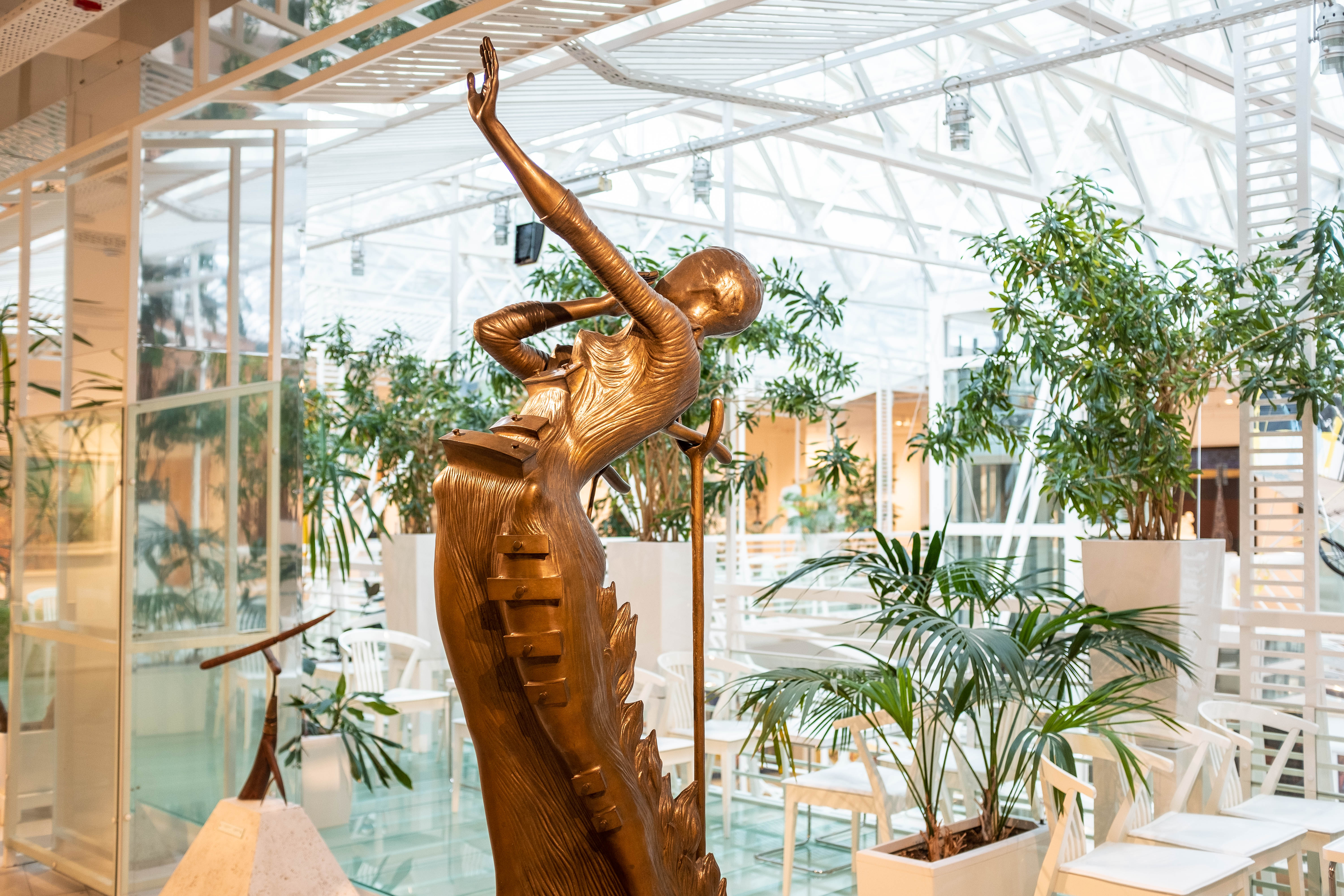
The following are some pics from my time in Baku, Azerbaijan.




 opusculum